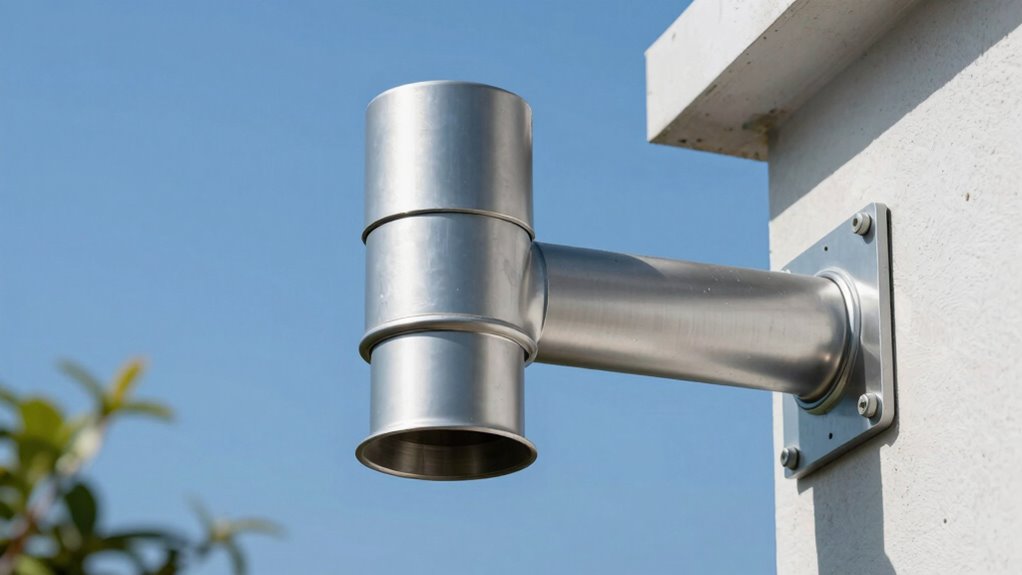
Proper venting is essential for your pool gas heater to operate safely and efficiently. Keep vents at least 12 inches away from windows, doors, and combustible materials, and use durable, corrosion-resistant materials suitable for outdoor use. Regularly inspect and maintain your vent system to prevent blockages and leaks. Following these clearance rules and avoiding common mistakes helps prevent dangerous fumes and improves performance. Learn more tips to ensure your heater runs safely and reliably.
Key Takeaways
- Maintain at least 12 inches of clearance from windows, doors, and combustible materials for safe venting.
- Use corrosion-resistant vent materials suitable for outdoor environments, like galvanized steel or PVC.
- Regularly inspect and clean vent pipes to prevent blockages, leaks, and deterioration.
- Ensure venting systems meet local building codes and manufacturer guidelines to avoid safety hazards.
- Address issues such as odors, soot, or leaks promptly by consulting professionals for proper diagnosis and repair.

INTEX 2,650 GPH Krystal Clear Sand Filter Pump and Saltwater Pool Chlorine System for Above Ground Pools, Pool Cleaner System with Automatic Timer
✔ FRESH AND CLEAN WATER – QX2600 uses sand for excellent filtration combined with the QS1200 saltwater system...
As an affiliate, we earn on qualifying purchases.
Why Proper Venting Is Critical for Your Pool Gas Heater
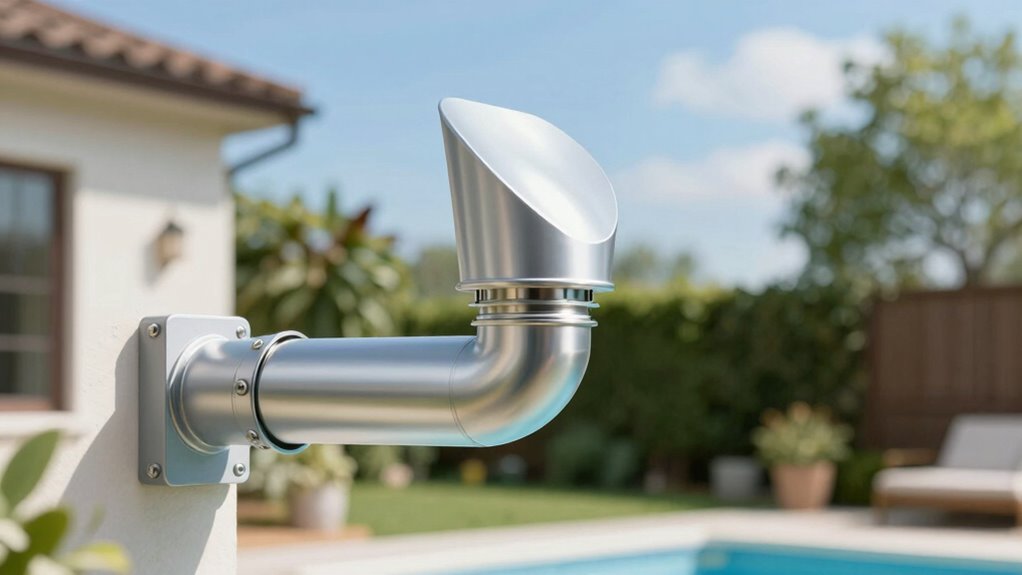
Proper venting is vital for your pool gas heater because it guarantees harmful gases like carbon monoxide are safely expelled outside. Without proper venting safety measures, dangerous fumes can accumulate, posing serious health risks. Ensuring your heater is vented correctly also boosts pool heater efficiency by allowing the combustion process to operate smoothly. When venting is inadequate, the heater may work harder to produce the same heat, wasting energy and increasing operational costs. Proper venting prevents backdrafts and blockages that could compromise performance. It also helps maintain consistent heater function, extending its lifespan. Additionally, understanding venting techniques can help you troubleshoot and improve your system’s safety and efficiency. Regular inspection and maintenance are essential to keep your venting system functioning properly and prevent potential hazards. Familiarity with venting regulations can further ensure compliance with safety standards. Being aware of common mistakes can help you avoid costly errors that compromise safety and performance. Proper venting is also crucial for air quality, ensuring that indoor environments remain safe from harmful fumes. In short, prioritizing correct venting is essential for safeguarding your health and optimizing your pool heater’s performance. Proper venting ensures safe, efficient operation year-round.

Pool Lights for Inground Pool, 60W 10 Inch LED Inground Pool Light with Controller, Remote and APP Control for Wet Niche, Color Changing Underwater Swimming Pool Lights with 50 Foot Cord
【3 Ways to Control: APP + Controller + Remote】Traditional led pool lights often suffer from signal loss due...
As an affiliate, we earn on qualifying purchases.
Essential Clearance Guidelines for Safe Gas Heater Venting

To guarantee your gas heater vents safely and operates efficiently, adhering to essential clearance guidelines is crucial. Proper clearance distances prevent dangerous buildup of vent gases and ensure proper airflow. Use quality venting materials designed for your heater, such as corrosion-resistant pipes. Typically, clearance distances vary depending on venting materials and local codes, but a general rule is to keep vents at least 12 inches away from windows, doors, and combustible materials. Ensuring the correct venting clearances helps maintain safe operation and compliance with safety standards. Additionally, understanding venting system requirements is vital for proper installation and ongoing safety. Regular inspections and maintenance of venting systems can also prevent potential hazards caused by blockages or corrosion, which underscores the importance of following manufacturer guidelines and local regulations for safe installation practices. Properly installed and maintained venting systems are essential for preventing hazardous gas buildup and ensuring long-term safety.

XtremepowerUS 24" Sand Filter Inground Ground Above Ground System Swimming Pool 29,400 Gallons
The Filter are perfectly engineered to provide optimum flow rates that promotes clean water quality
As an affiliate, we earn on qualifying purchases.
How to Choose the Best Venting System for Your Pool Heater

Selecting the right venting system for your pool heater guarantees safe operation and efficient performance. Start by considering vent material choices, such as stainless steel or PVC, which impact durability and safety. Stainless steel is durable and resistant to corrosion but often more expensive, while PVC is easier to install and cost-effective but less heat-resistant. Next, evaluate venting system types, like direct vent, power vent, or natural draft systems. Each type suits different setups and efficiency needs. A direct vent system draws air directly from outside and expels gases safely, making it ideal for tight spaces. Power vents use an inline fan for improved venting, suitable for longer runs. Choose a system that aligns with your heater’s specifications and your installation environment for *best* safety and performance. Additionally, understanding venting regulations can help ensure your setup complies with local safety standards.
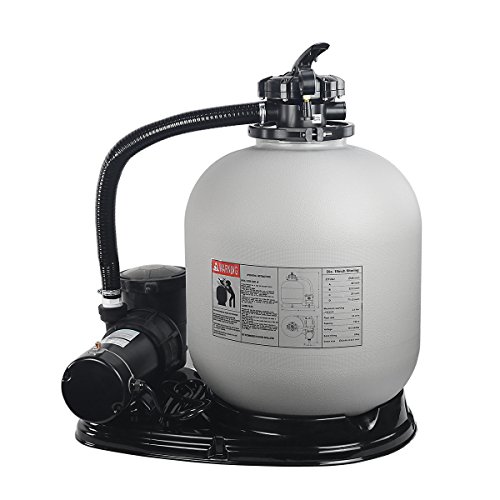
XtremepowerUS 19" Sand Filter 1.5HP Pump 4500 GPH Swimming Pumps System & Filters Combo Set Multi-Port Valve, for Domestic and Commercial Pools up to 18,000 Gallons Pool
Powerful, All-in-One Performance - With an impressive flow rate of 4,500GPH, 1.5HP sand filter pump is ideal for...
As an affiliate, we earn on qualifying purchases.
Installing Your Pool Gas Heater Venting: A Step-by-Step Guide
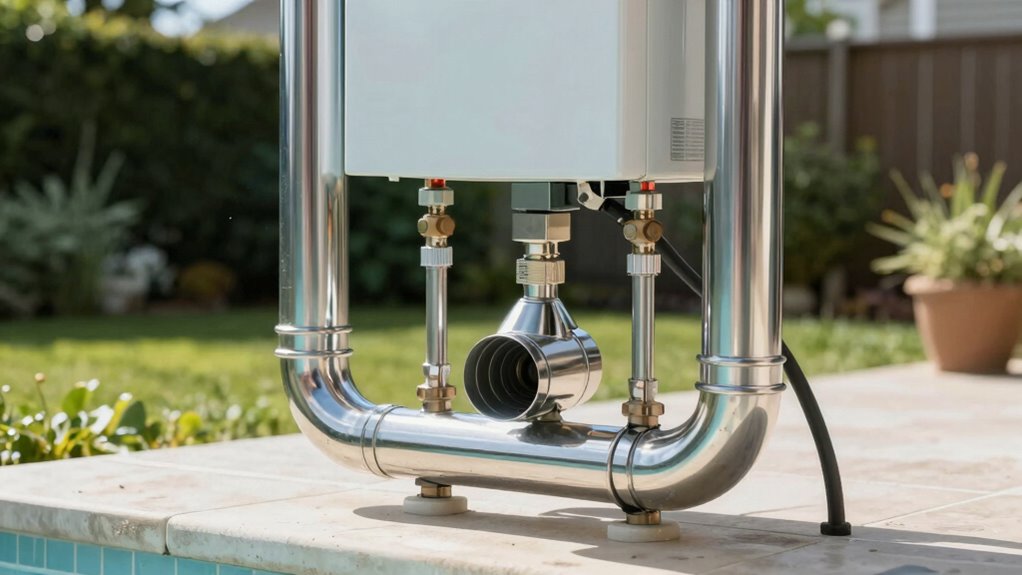
Installing your pool gas heater venting system requires careful planning and precise execution to guarantee safety and peak performance. First, select the right vent pipe materials, such as galvanized steel or PVC, suited for outdoor use and resistant to weather. Next, follow these steps:
- Measure and mark the correct vent pipe length, considering clearance rules.
- Cut the vent pipe accurately, avoiding rough edges.
- Connect the vent pipe sections securely using appropriate fittings and sealant.
- Ensure the vent terminates outdoors, away from windows and doors, following outdoor installation tips for proper clearance.
- Verify proper navigation and mapping to avoid obstructions that could block airflow or cause improper venting.
- Proper installation also includes confirming the placement complies with quality assessment standards and local codes to ensure safety and efficiency. Additionally, understanding venting regulations can help prevent common mistakes and ensure code compliance. Being aware of clearance requirements is essential for maintaining safe distances from combustible materials and structures.
Always double-check that all connections are airtight and the vent is positioned to prevent blockages or exposure to elements. Proper installation ensures safe venting and ideal heater performance.
Maintenance Tips for Safe and Efficient Venting
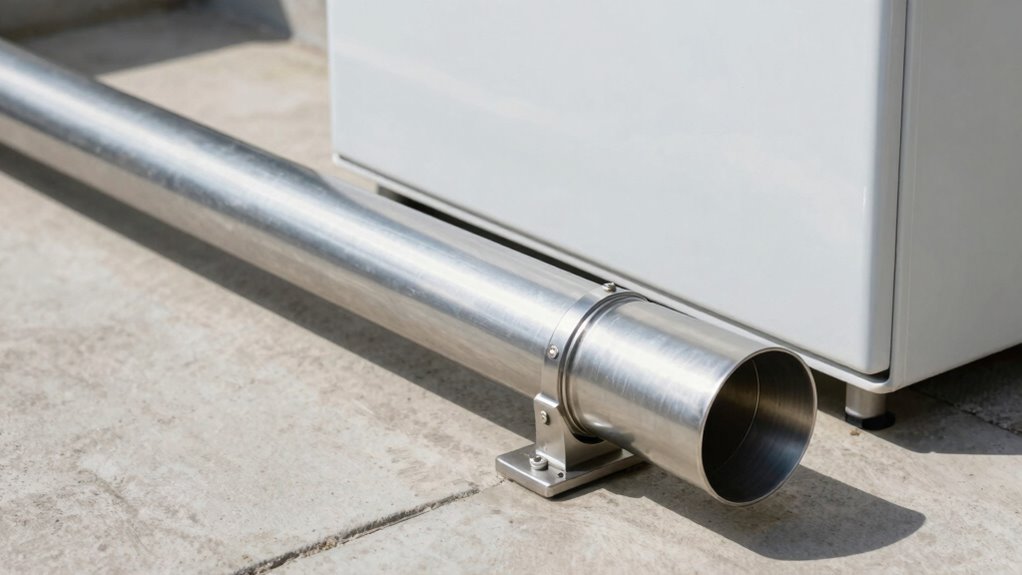
Regularly inspecting and maintaining your pool gas heater’s venting system helps guarantee safe operation and maximum efficiency. Check that the vent pipe insulation remains intact to prevent heat loss and protect against moisture buildup. Ensure outdoor vent covers are clear of debris, leaves, and obstructions to allow proper exhaust flow. Regularly clean the vent openings to prevent blockages that could cause dangerous backdrafts. Additionally, Free Floating components can sometimes shift or degrade over time, so it’s important to periodically verify their condition. Proper filtration and airflow are essential for maintaining optimal performance and safety standards. Understanding venting regulations can help you avoid common mistakes and ensure compliance. Use the table below to keep track of your maintenance tasks:
| Task | Frequency | Notes |
|---|---|---|
| Inspect vent pipe insulation | Monthly | Replace if damaged |
| Clean outdoor vent covers | Bi-weekly | Remove debris and obstructions |
| Check for leaks | Quarterly | Seal any gaps or cracks |
| Ensure proper clearance | Annually | Maintain recommended distances |
Keeping up with these tips guarantees safe, efficient venting and prolongs your heater’s lifespan. Proper venting practices are essential for maintaining optimal performance and safety standards.
Troubleshooting Common Venting Problems and Solutions
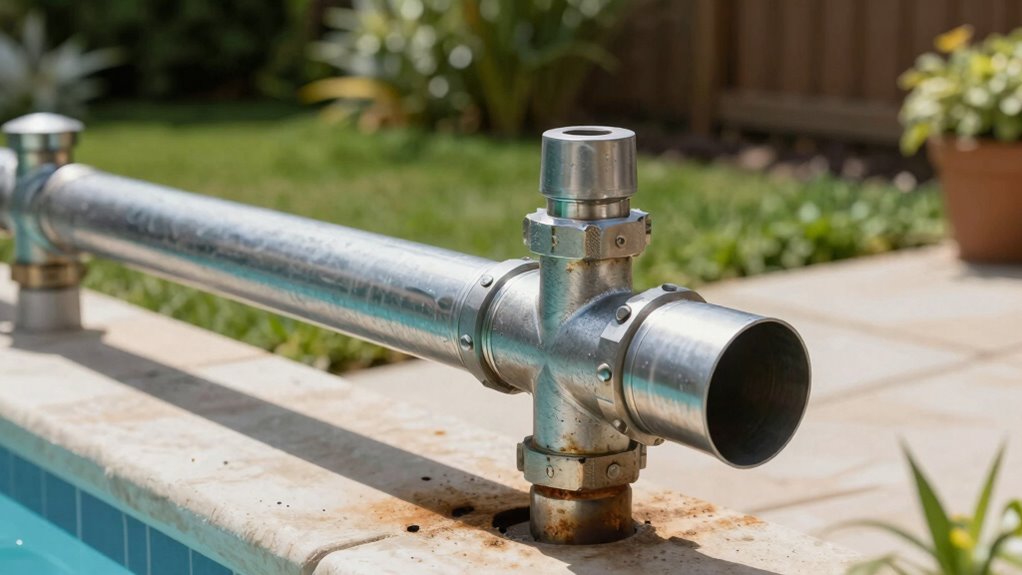
When your pool gas heater isn’t venting properly, it can lead to dangerous backdrafts, poor heater performance, or system shutdowns. To troubleshoot, consider these common issues:
- Blocked vent pipe – Clear debris or nests that obstruct airflow. Proper venting is essential for safe operation and long-term system reliability. Ensuring the correct vent pipe materials are used can prevent deterioration and blockages caused by corrosion or heat damage. Additionally, inspecting for signs of corrosion or heat damage can help identify potential future failures.
- Incorrect vent pipe materials – Ensure you’re using suitable materials that withstand heat and corrosion.
- Poor airflow optimization – Check for leaks or obstructions that reduce vent efficiency.
- Leaning or misaligned vent pipes – Adjust to promote proper draft and prevent backflow.
Addressing these problems involves inspecting your vent pipe materials and making necessary replacements or adjustments. Proper airflow optimization is critical to ensure safe, efficient venting and prevent hazardous conditions. Regular checks keep the system running smoothly. Additionally, understanding the thermal behavior of venting systems can help diagnose and prevent issues before they occur.
What Are the Local Codes and Regulations for Pool Heater Venting?
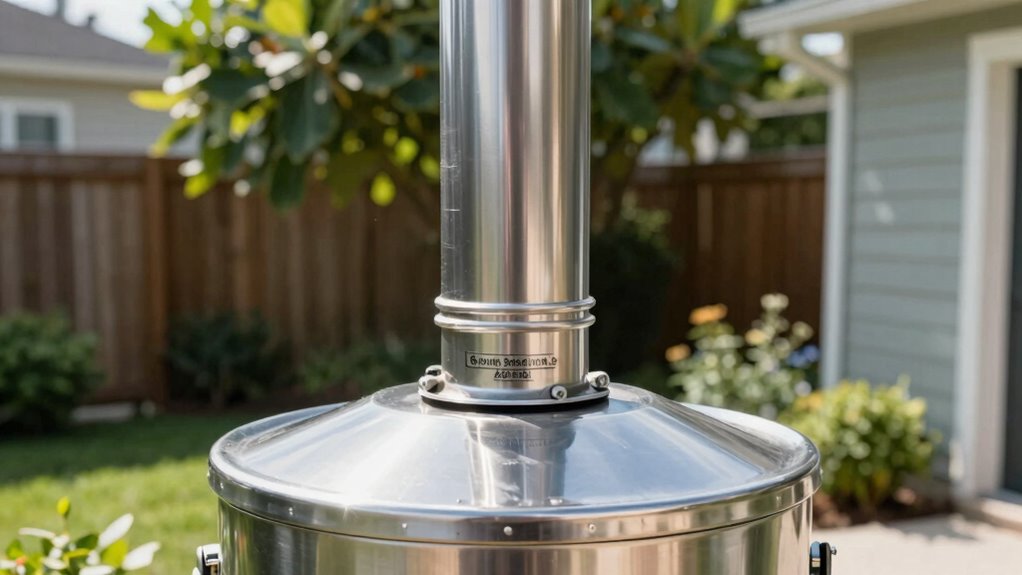
Understanding and complying with local codes and regulations for pool heater venting is essential to guarantee safe and legal operation. Local building codes often specify venting safety requirements, including proper clearance distances, vent material standards, and exhaust termination points. These regulations aim to prevent dangerous buildup of carbon monoxide and ensure proper airflow. You must check with your city or county authorities to identify specific rules that apply to your area. Failing to follow these codes can lead to unsafe conditions, legal penalties, or voided warranties. Ensuring code compliance helps you avoid hazards and maintain ideal heater performance. Always consult a licensed professional or local building department before installing or modifying venting systems to meet all applicable standards. Proper vent installation is crucial for safe operation and adherence to regulations.
Recognizing Venting Issues: When to Call a Professional

If you notice unusual smells, excessive condensation, or the heater frequently shuts off, it could signal venting issues. Don’t ignore these signs, as they might indicate dangerous problems. When in doubt, it’s best to call a professional to inspect and fix the system safely.
Signs of Venting Problems
Venting problems with your pool gas heater can pose serious safety risks and reduce the heater’s efficiency. Watch for these signs to identify issues early:
- Unusual or strong odors near the heater, indicating exhaust gases aren’t venting properly.
- Soot or carbon buildup around the vent or chimney, suggesting a chimney blockage or improper sealing.
- Yellow or flickering pilot lights, which may signal incomplete combustion caused by venting issues.
- Excessive condensation or moisture around the vent area, hinting at venting obstructions or leaks.
If you notice any of these signs, don’t delay—venting problems can lead to dangerous carbon monoxide buildup. Call a professional to inspect and resolve the issue safely.
When to Seek Professional Help
Recognizing when to call a professional is vital to guarantee your pool gas heater operates safely and efficiently. If you notice persistent venting problems, strange odors, or inadequate airflow despite attempting DIY fixes, it’s time to seek expert help. Handling venting materials improperly or attempting to troubleshoot complex venting issues can be dangerous. Professionals can evaluate whether your venting setup meets safety standards and ensure proper installation.
| Signs You Need Help | Why It Matters |
|---|---|
| Persistent venting issues | Risks unsafe gas buildup |
| Strange odors or fumes | Indicates incomplete combustion |
| Inconsistent heater performance | Proper venting ensures efficiency |
Improving Heater Performance With Correct Venting Practices

Have you ever considered how proper venting can boost your pool gas heater’s efficiency? Correct venting practices ensure safe, effective removal of combustion gases, directly improving your pool heater efficiency. To maximize performance, focus on these key steps:
- Use high-quality venting materials designed for gas appliances to prevent leaks and corrosion.
- Maintain the recommended clearance distances to ensure proper airflow and venting.
- Keep vents clean and free of obstructions for optimal exhaust flow.
- Regularly inspect for leaks or damage that could reduce venting effectiveness.
Frequently Asked Questions
How Often Should I Inspect My Pool Heater Venting System?
You should inspect your pool heater venting system at least once a year to guarantee vent pipe maintenance and venting system safety. Regular checks help you spot blockages, corrosion, or leaks early, preventing dangerous buildup of gases. If you notice any issues, conduct repairs immediately. Consistent inspections maintain ideal heater performance and keep your environment safe, giving you peace of mind during the swimming season.
Can I Vent My Pool Heater Indoors?
You shouldn’t vent your pool heater indoors because indoor venting can compromise venting safety. Gas heaters produce harmful gases like carbon monoxide, which need proper outdoor ventilation to prevent buildup. Venting safety is vital to avoid health risks or dangerous leaks. Always follow manufacturer guidelines and local codes, and consider professional installation to guarantee your pool heater’s venting system is safe and compliant.
What Materials Are Best for Venting Pipes?
A stitch in time saves nine, so choose the right vent pipe materials now. For venting your pool gas heater, stainless steel and PVC are top options. Stainless steel is corrosion-resistant and durable, perfect for outdoor or humid environments. PVC is also corrosion-resistant and easy to install. Both options help prevent leaks and ensure safe venting. Select high-quality, corrosion-resistant vent pipe materials to prolong your system’s lifespan and maintain safe operation.
Are There Specific Weather Conditions That Affect Venting?
Weather impact, especially wind effects, can substantially affect venting performance. Strong winds may cause backdrafts or disrupt the proper flow of exhaust gases, leading to poor ventilation and safety hazards. Cold or humid conditions can also cause condensation inside the vent pipes, potentially blocking airflow. You should regularly inspect your venting system during adverse weather and consider installing wind shields or caps to minimize these effects and guarantee safe, efficient operation.
How Do I Identify if My Venting System Is Improperly Installed?
You can tell if your venting system is improperly installed by checking for vent pipe corrosion, which indicates leaks or moisture issues. Additionally, look for signs of improper vent termination, such as obstructions or incorrect placement near windows or vents. If you notice rust, rust-colored stains, or soot buildup around the vent pipe, it’s a clear sign that your system needs inspection and possible adjustment to guarantee safe operation.
Conclusion
By mastering proper venting, you’re not just ensuring safety—you’re giving your pool heater a gust of fresh life. Think of your venting system as its lifeline, guiding harmful gases safely away and letting warmth flow freely. When you follow the rules and keep an eye on potential issues, you’re crafting a sanctuary of comfort and peace. Protect your oasis, breathe easy, and let your pool heater shine brightly for years to come.