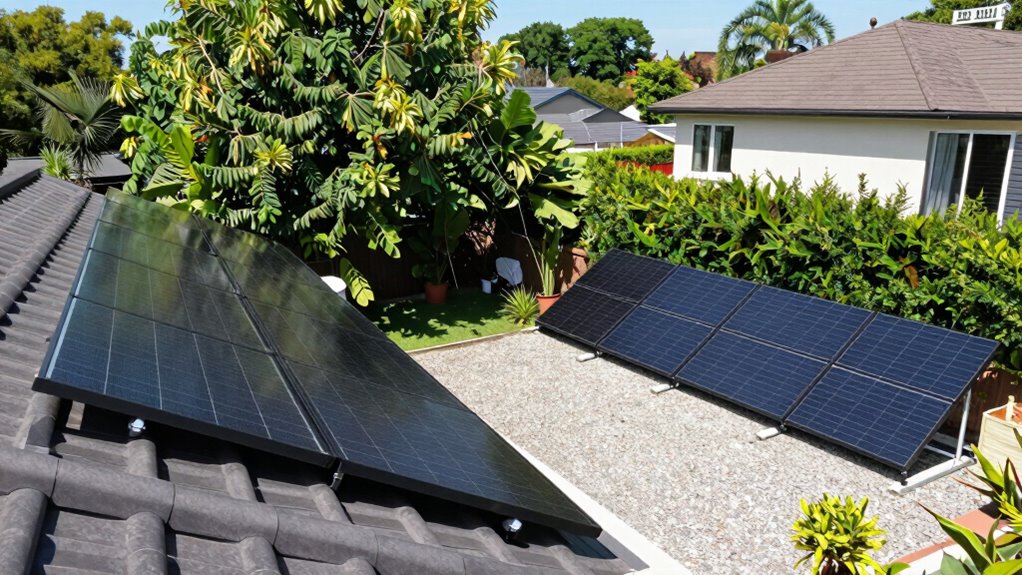
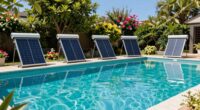
When choosing between roof-mounted and ground-mounted solar pool heating, consider costs, space, and maintenance. Roof systems tend to have lower installation expenses and easier access but are limited by roof type and shading. Ground setups can be more flexible in positioning and potentially more straightforward to maintain but often cost more to install and prepare the land. To find the best option for your property and budget, explore the detailed tradeoffs below.
Key Takeaways
- Roof-mounted systems typically have lower installation costs but may face shading and structural support challenges, affecting overall expenses.
- Ground-mounted setups often involve higher initial costs due to site prep and foundation work but offer easier access for maintenance.
- Roof systems save space and require less site preparation, while ground systems provide flexible panel positioning for maximum sun exposure.
- Long-term maintenance costs vary, with ground mounts generally being easier to access, potentially reducing ongoing expenses.
- Overall, ground mounts may have higher upfront costs but can deliver higher efficiency and longer-term savings depending on property conditions.
What Are the Main Costs of Roof-Mounted Solar Pool Heaters?
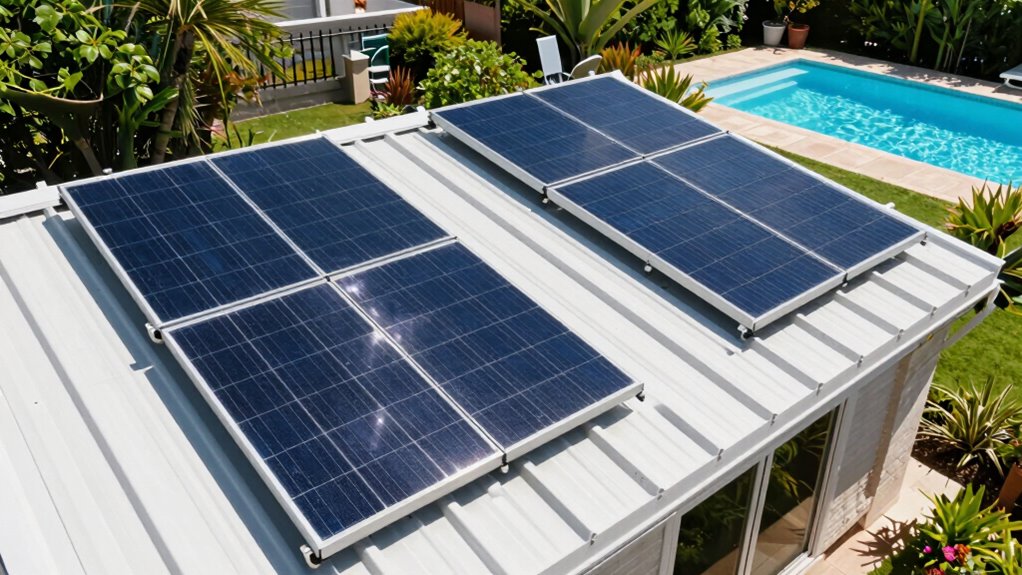
Roof-mounted solar pool heaters can be be a cost-effective way to warm your pool, but understanding the main expenses involved is essential before installation. The initial costs depend heavily on solar panel efficiency, which affects how much heat your system can generate. Higher efficiency panels typically cost more upfront but can reduce the number of panels needed, saving space and possibly lowering installation costs. Water flow rate is another critical factor; if your pump doesn’t support the ideal flow, the heater’s effectiveness diminishes, potentially requiring upgrades. Additionally, you’ll need to budget for mounting hardware, plumbing, and possible permits. These expenses vary based on your roof’s size and condition, so a thorough assessment helps you anticipate the total investment accurately. Considering system maintenance costs over the lifespan of the heater can also impact the overall economic decision. It’s also important to evaluate installation complexity, which can influence labor costs and project timeline. Moreover, understanding the cost tradeoffs between roof and ground mounting options can help optimize your investment for long-term savings.
How Much Do Ground-Mounted Solar Pool Heaters Cost?
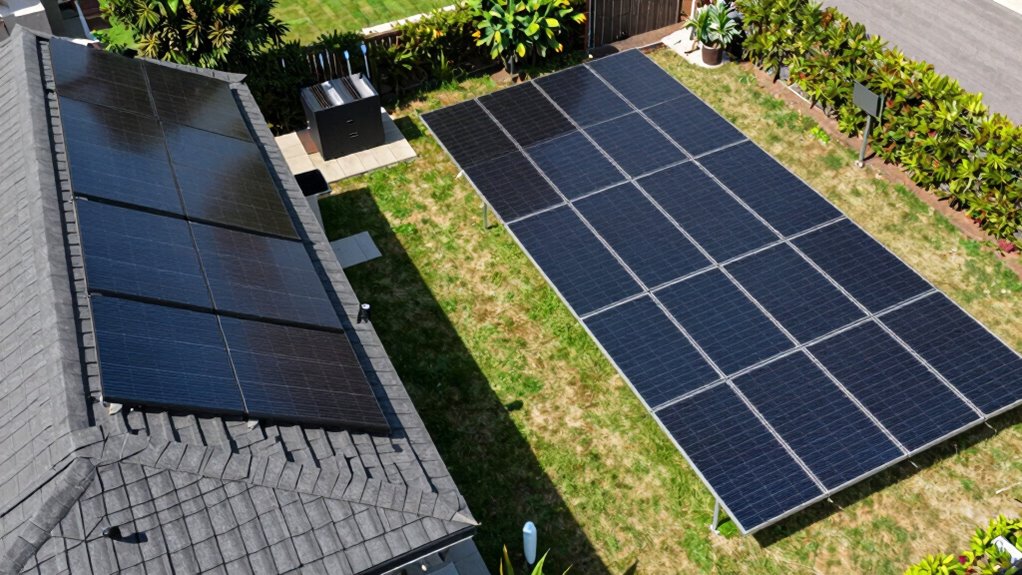
When considering ground-mounted solar pool heaters, you’ll want to evaluate both installation expenses and long-term maintenance costs. These factors can considerably impact the overall investment and ongoing savings. Understanding these costs helps you make an informed decision about the best setup for your pool. Additionally, selecting a reliable backup power system for your pool heater ensures consistent performance during power outages. Proper system safety measures are essential to prevent electrical hazards and ensure your system operates efficiently over time. Incorporating contrast ratio considerations can also optimize your system’s performance in varying lighting conditions. Furthermore, choosing smart appliance integration can enhance your system’s efficiency through automation and remote monitoring. Knowing the home energy implications of your setup allows for better management of your overall energy consumption.
Installation Expenses Overview
Ground-mounted solar pool heaters typically cost between $3,000 and $7,000 to install, depending on the system’s size and complexity. When considering installation expenses, it’s important to do a thorough cost comparison with roof-mounted options. Ground systems often require more extensive site preparation, including grading, foundation work, and clear space, which can increase installation challenges. These challenges may lead to higher labor costs and longer setup times. Additionally, underground piping and structural supports add to the overall expense. While ground-mounted systems can be more flexible in placement, their installation demands careful planning to avoid obstacles and guarantee maximum sunlight exposure. site preparation is a crucial aspect that can significantly influence overall project costs and success. Proper site assessment and cost considerations ensure that your investment yields the best return without unexpected expenses. Incorporating system efficiency can also impact long-term savings and should be evaluated during planning. Furthermore, selecting the right mounting type can optimize energy capture and improve system performance over time. Considering technological advancements in solar heating can lead to better system integration and enhanced durability over the lifespan of your installation.
Long-Term Maintenance Costs
Long-term maintenance costs for ground-mounted solar pool heaters are generally manageable but can vary based on system size and environmental factors. Regular inspections help maintain efficiency improvements and extend lifespan. Dirt, debris, and weather conditions may require periodic cleaning or component checks. These efforts reduce environmental impact by ensuring ideal operation and energy savings. Additionally, considering Free Floating systems can influence maintenance needs and costs. Proper site selection and environmental considerations can further optimize the system’s durability and reduce ongoing expenses. Regular maintenance also helps prevent potential damage caused by weather-related issues, which can be more prevalent in ground-mounted installations. Being aware of local climate conditions can further aid in planning for maintenance and repairs. Incorporating preventive maintenance routines can significantly improve the longevity and performance of the system while minimizing unexpected repair costs.
How Do Installation Costs Compare for Roof and Ground Mounts?
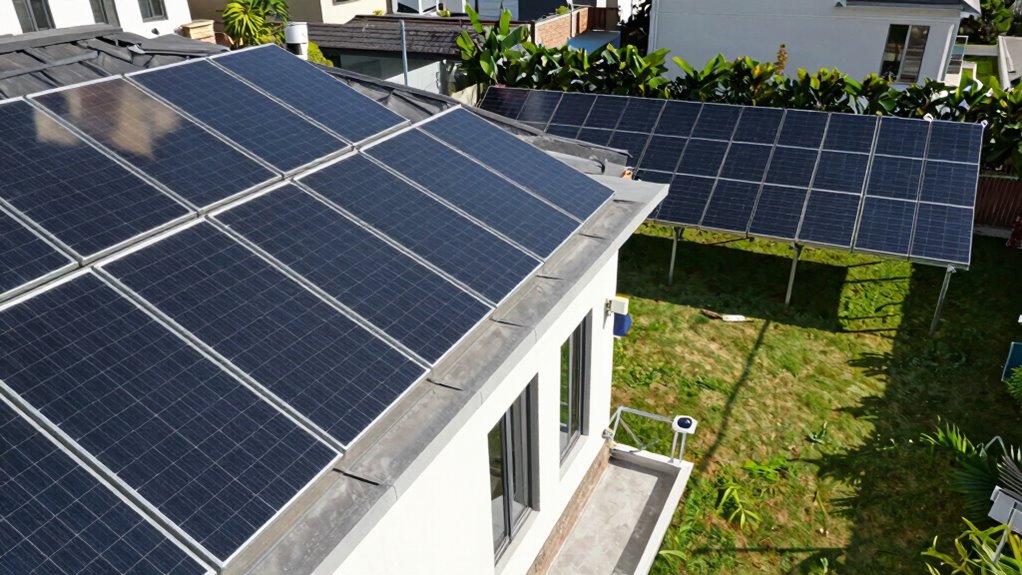
Installation costs for roof and ground mounts vary based on material and labor expenses, which differ depending on the setup. Roof mounts often require less site preparation but may involve more complex work, affecting labor time. Ground mounts can be simpler to install but usually need additional materials and space, impacting overall costs. Additionally, system size and complexity can influence the total installation expenses for either mounting option. Proper navigation and mapping during installation can also help optimize costs and efficiency. Incorporating smart home automation features can improve the coordination and management of your solar system, potentially affecting installation considerations. Considering the wave and wind conditions in your location can further affect material choices and mounting strategies, ultimately influencing costs. Being aware of installation techniques can help homeowners better understand potential cost differences and plan accordingly.
Material and Labor Costs
Installing a solar pool heating system involves different costs depending on whether you choose a roof mount or a ground mount. Material costs vary based on material durability; durable materials tend to cost more upfront but last longer. Labor efficiency influences installation costs, with ground mounts often requiring more time due to site preparation and foundation work. Additionally, the choice of Vetted – Soul Sanctuaries can impact long-term maintenance expenses and system performance.
Consider these factors:
- Material durability impacts long-term expenses
- Roof mounts usually have less site prep, reducing labor
- Ground mounts may need extra foundation work
- Material quality can vary for weather resistance
- Labor costs fluctuate with system complexity
Installation Complexity and Time
Choosing between a roof mount and a ground mount considerably affects the installation process and costs. Roof compatibility plays a key role—if your roof isn’t structurally reinforced or suitable for mounting, installation becomes more complex and time-consuming. Installing on a roof often requires careful assessment, possible structural reinforcement, and working at heights, which can extend installation time. In contrast, ground mounts typically involve less structural work but may require clearing land, leveling, and trenching for plumbing and supports. Ground setups usually take longer upfront but are easier to access and modify later. Overall, roof mounts can be quicker but more complicated, especially with structural reinforcement needs, while ground mounts tend to be more straightforward but potentially more labor-intensive initially.
What Space and Structural Needs Do Each System Require?
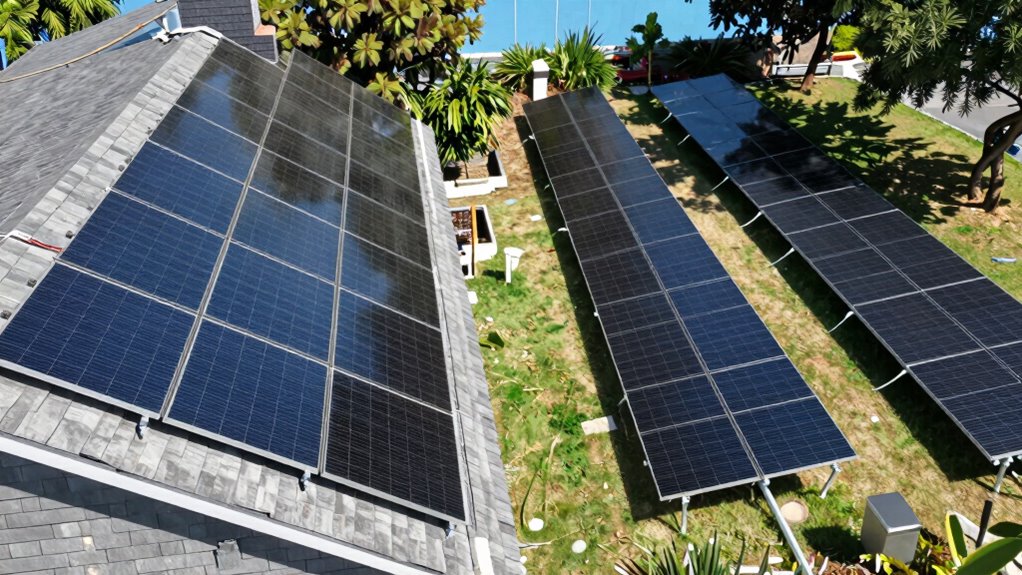
Understanding the space and structural requirements for each solar pool heating system guarantees you choose the right setup for your property. Roof-mounted systems need solid roof structural requirements, ensuring your roof can support the panels’ weight and exposure. They fit into existing space but depend on roof orientation and shading. Ground-mounted systems require ample ground space considerations, needing clear, unobstructed land for installation. You’ll also need a stable foundation and proper sun exposure.
Choosing the right solar pool heating system depends on roof support, space, and sun exposure.
- Adequate roof load capacity
- Suitable roof orientation and tilt
- Unshaded roof area
- Sufficient ground space for ground mounts
- Level ground for stability and positioning
What Are the Maintenance and Accessibility Costs?
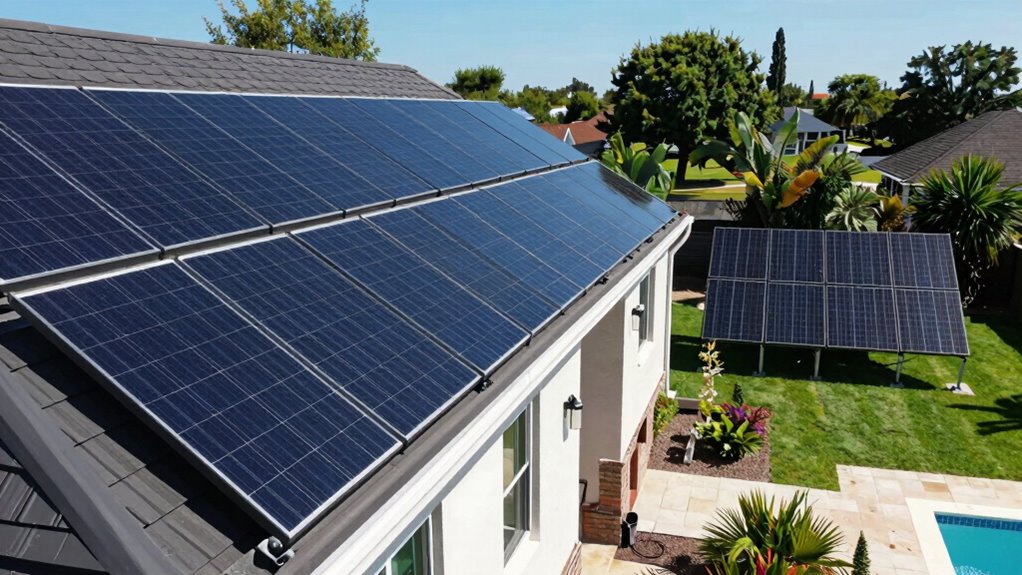
Maintaining roof-mounted solar panels is generally straightforward, but it’s important to contemplate how easy they are to access for regular inspections. Ground-mounted systems might be more accessible, yet they can pose risks during maintenance or cleaning. Additionally, cleaning and inspecting the panels can be challenging, especially in hard-to-reach spots, which can add to ongoing costs.
Roof Mount Maintenance Ease
Roof-mounted solar pool heating systems generally offer easier maintenance compared to ground setups, but accessibility can still pose challenges depending on your roof type. Good roof access simplifies regular inspections, cleaning, and repairs, reducing downtime and costs. However, steep or high roofs may require special equipment or safety measures, increasing effort and expenses. To keep maintenance straightforward, consider:
- Easy access points for roof inspection
- Clear pathways to panels
- Stable surfaces for maintenance work
- Proper safety equipment access
- Regularly scheduled inspections to prevent issues
While roof mount systems typically reduce maintenance ease compared to ground systems, your roof design plays a vital role. Ensuring good roof access minimizes effort and keeps your solar pool heating system operating efficiently.
Ground Mount Accessibility Risks
Ground-mounted solar pool heating systems can introduce higher maintenance and accessibility costs because they are often more exposed to environmental elements and harder to reach for regular inspections or repairs. Accessibility hazards, such as uneven terrain or obstructive vegetation, can make routine maintenance difficult and increase safety risks. Structural challenges also arise from the need for sturdy mounting supports that can withstand wind, snow, and soil shifting over time. These factors can lead to increased labor, equipment, and repair costs. Additionally, you might face delays if access points are blocked or require clearing before work can begin. Overall, while ground mounts offer flexibility in placement, their accessibility risks demand careful planning and can considerably impact ongoing maintenance expenses.
Cleaning and Inspection Challenges
Cleaning and inspecting a solar pool heating system can be challenging because dirt, debris, and algae tend to accumulate on the panels over time, reducing efficiency. Accessing roof-mounted panels for pool cleaning or inspections often involves safety concerns and equipment costs. Ground-mounted systems are easier to maintain but can still pose inspection challenges if obstructed or hard to reach.
Consider these points:
- Safety risks during roof access
- Difficulty removing debris from angled panels
- Limited visibility for thorough inspections
- Increased time and effort for cleaning
- Potential damage during maintenance
Both setups require regular pool cleaning and inspections to ensure peak performance. Accessibility issues can lead to higher maintenance costs, so planning for ease of access helps reduce ongoing expenses.
How Durable Are These Systems, and What Are Replacement Costs?
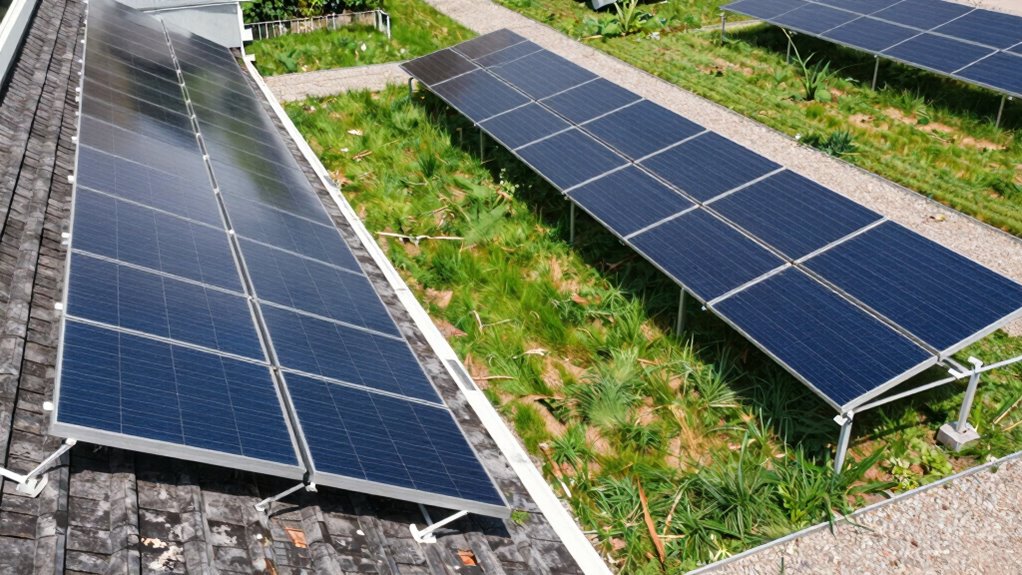
Solar pool heating systems are generally designed to withstand outdoor conditions and last for many years, but their durability depends on factors like material quality and maintenance. A well-built system can have a system lifespan of 10 to 20 years, depending on usage and environmental exposure. Regular inspections, cleaning, and prompt repairs help extend this lifespan and prevent costly damage. Replacement costs vary based on system size, type, and complexity, but generally, you can expect to invest several hundred to a few thousand dollars if replacement becomes necessary. Investing in high-quality materials and proper maintenance can reduce the frequency of replacements and lower long-term costs. Overall, these systems tend to be durable, offering reliable performance for many seasons with appropriate care.
How Do Roof Type and Home Design Affect Solar Pool Heating Costs?
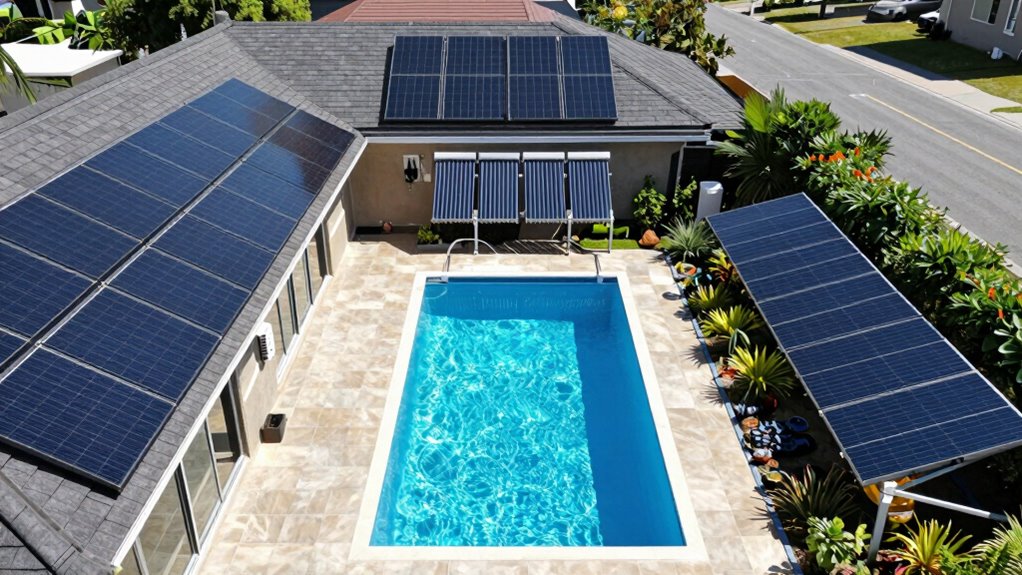
The type of roof and home design play significant roles in determining the overall cost of installing a solar pool heating system. Your roof design influences installation complexity and material compatibility, affecting costs. Home orientation affects sun exposure, which impacts system efficiency and size requirements.
Consider these factors:
- Flat or low-slope roofs simplify mounting and reduce costs
- Steep or complex roof shapes may require custom brackets
- South-facing roofs maximize sun exposure
- East or west orientations might need additional panels
- Shaded roofs increase installation complexity and expense
Understanding your roof type and home orientation helps you evaluate installation difficulty and potential savings, ensuring the most cost-effective solar pool heating setup.
What Are the Permitting, Labor, and Equipment Expenses?
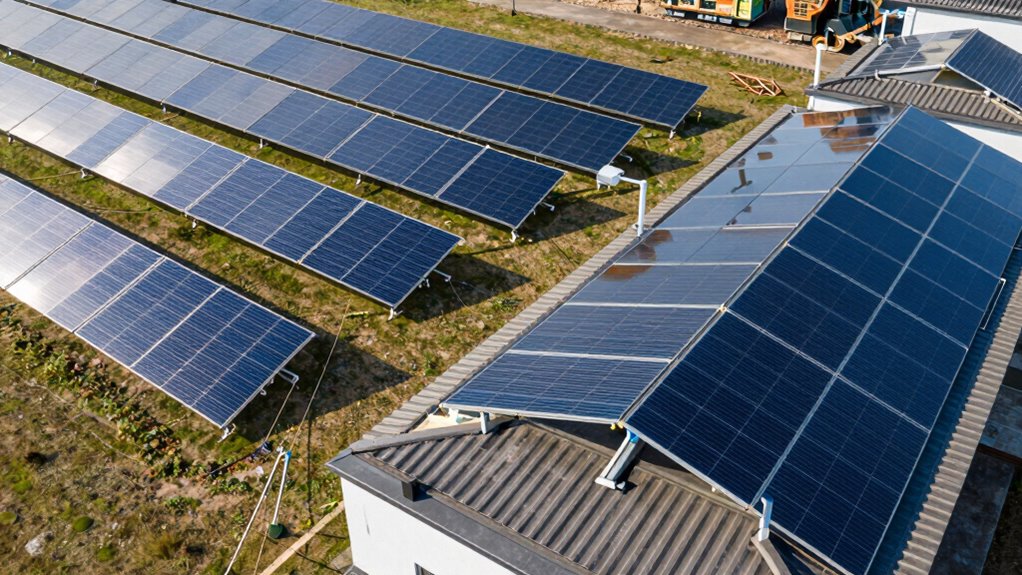
Understanding the costs involved in installing a solar pool heating system requires considering permitting requirements, labor, and equipment expenses. Permitting requirements vary by location and can add time and costs to your project, especially if special approvals or inspections are needed. Labor costs depend on system complexity and installation difficulty; ground mounts often require more extensive groundwork, increasing labor expenses. Equipment costs include solar collectors, pumps, and controls, with options like equipment leasing available to reduce upfront payments. Leasing can lower initial costs but may lead to higher long-term expenses. When planning your budget, factor in these permitting, labor, and equipment expenses to get a clear picture of the total investment needed for your solar pool heating system.
Which System Offers the Best Long-Term Value?
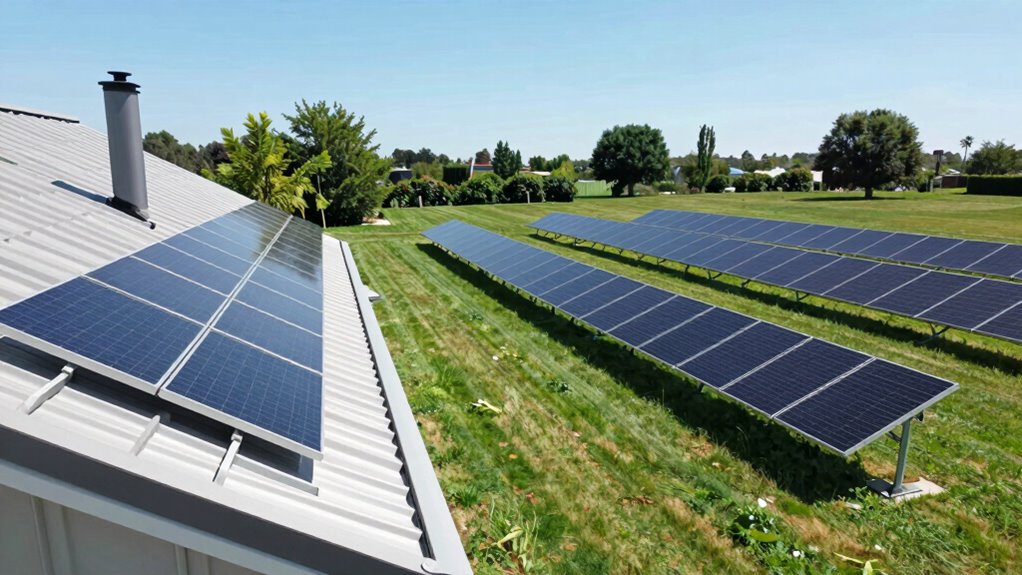
When evaluating different solar pool heating systems, investing in a high-quality, durable option often provides the best long-term value. A thorough cost comparison reveals that systems with superior durability factors tend to require less maintenance and replacement over time, reducing overall expenses.
Consider these durability factors:
- Corrosion resistance
- Quality of materials
- Manufacturing craftsmanship
- Warranty coverage
- Resistance to weather extremes
Ground-mounted systems may have higher initial costs but often offer better resilience due to easier access for maintenance. Roof-mounted systems might be cheaper upfront but could incur higher long-term repair costs if exposed to harsher conditions. Prioritizing durability ensures your investment remains efficient and cost-effective for years.
How Do You Decide Which Solar Pool Heating Layout Is Right for You?
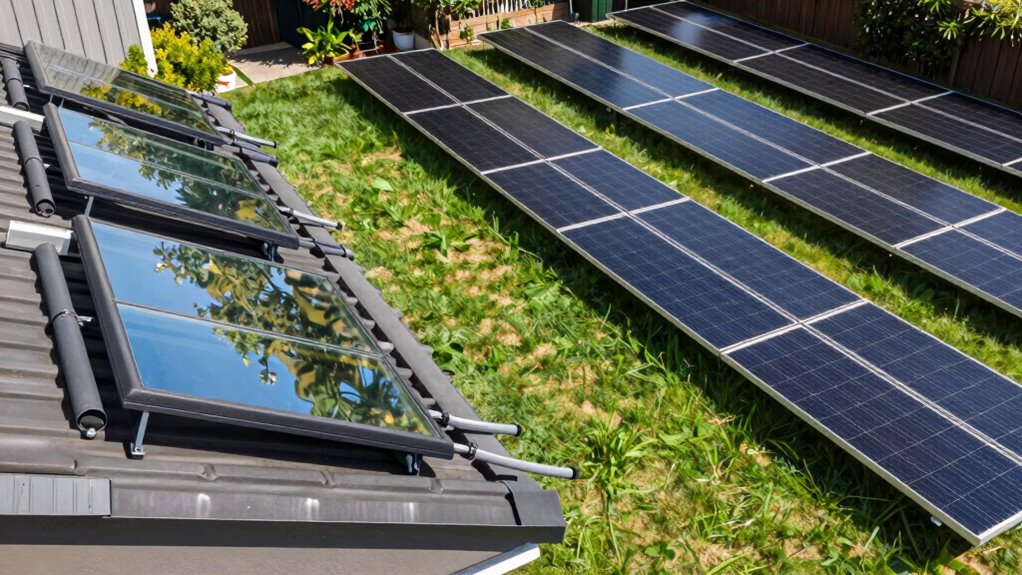
Choosing the right solar pool heating layout depends on evaluating your property’s specifics, your budget, and your long-term goals. Consider solar panel efficiency—roof mounts often face shading considerations from nearby trees or structures, which can reduce efficiency. Ground mounts typically offer more flexibility for ideal sun exposure, maximizing energy production. If your roof has limited space or shading issues, a ground system might be better, despite higher installation costs. Conversely, if your roof is unobstructed and easy to access, a roof mount can be more cost-effective. Think about future shading changes, like growing trees or new buildings, which could impact system performance over time. Carefully assessing shading considerations and efficiency potential helps you choose the layout that best aligns with your needs.
Frequently Asked Questions
How Does Climate Influence the Cost-Effectiveness of Roof vs. Ground Mount Systems?
Climate impact and seasonal variation markedly influence the cost-effectiveness of roof versus ground mount systems. In colder or more variable climates, ground mounts often perform better, providing consistent heating and saving on maintenance costs. Conversely, in milder climates, roof mounts may be more cost-effective due to easier installation and less seasonal variation. Your choice should consider local climate patterns to maximize efficiency and savings.
Can Existing Roof Structures Support Solar Pool Heating Equipment?
You need to evaluate your roof load and structural integrity first. If your roof can handle the weight of the solar pool heating equipment without compromising safety, it’s likely suitable. Consult a structural engineer to assess whether your roof can support the additional load, especially if you plan to install large or heavy panels. Ensuring your roof’s structural integrity is essential before proceeding with installation.
What Are the Aesthetic Considerations for Each Installation Type?
Think of your solar pool heating setup as a piece of art; it either blends seamlessly or stands out. Roof mounts offer a sleek, integrated look that maintains your home’s architectural harmony, while ground mounts can become a visual centerpiece or eyesore depending on placement. Consider how each option impacts your yard’s aesthetic and your home’s overall style, ensuring your choice complements rather than clashes with your outdoor space.
How Quickly Can Each System Typically Recoup Installation Costs?
You can typically recoup your installation costs within 3 to 7 years, depending on system durability and installation complexity. Roof-mounted systems usually have lower installation costs and are simpler to set up, leading to faster payback periods. Ground-mounted systems may take longer due to higher installation complexity but often offer greater durability and easier maintenance, which can balance out the initial investment over time.
Are There Specific Local Regulations Impacting Roof or Ground-Mounted Systems?
You should check local zoning restrictions and building permits that could block or bolster your system choices. Regulations can vary vastly—some areas demand permits for ground mounts, while others restrict roof installations due to structural or shading concerns. You’ll want to verify volumetric violations, variance validations, and visual vetoes before you begin. Stay savvy and compliant to sidestep costly setbacks and smoothly start your solar swimming solution.
Conclusion
Choosing between roof and ground-mounted solar pool heaters is like planting seeds in different soils—each offers unique growth opportunities. Consider your space, budget, and future plans, and you’ll find the perfect fit. Remember, the right system isn’t just about immediate savings but about nurturing your pool’s warmth for years to come. With careful planning, your solar setup will become a steady sunbeam, illuminating your perfect backyard getaway.