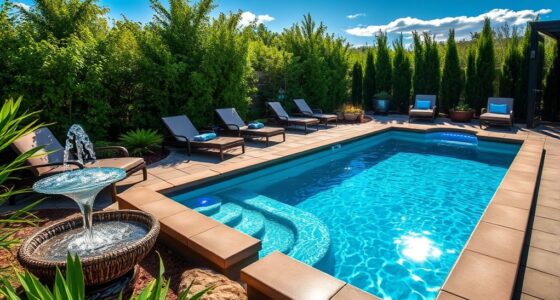
Choosing between above-ground and inground pools depends on your budget, space, and long-term plans. Above-ground pools are budget-friendly, quick to install, and great for temporary use or families with small children. Inground pools are more durable, customizable, and boost property value, but they require a larger investment and longer setup time. To find the best fit for your lifestyle and yard, consider your priorities—more details will help you decide.

Get pool and patio gear delivered free — and shop member deals
- Fast, free delivery on millions of items
- Access to Prime Big Deal Days deals on October 6–7
- Prime Video, Amazon Music and more included
Key Takeaways
- Choose above-ground pools for quick, budget-friendly installation and temporary use; opt for inground pools for long-term, customizable luxury.
- Above-ground pools offer easier maintenance and safety features, while inground pools require more upkeep but provide a more permanent, aesthetic upgrade.
- Consider safety: above-ground pools are elevated and easier to supervise; inground pools may need additional fencing and safety measures.
- Budget constraints favor above-ground pools due to lower upfront costs; inground pools are more expensive but increase property value.
- Your lifestyle and maintenance willingness should guide your choice: quick enjoyment with above-ground or a durable, integrated inground solution.

When choosing a pool for your backyard, understanding the differences between above-ground and inground options is essential. Your decision will impact not just the look of your outdoor space but also how you manage pool maintenance and ensure safety for everyone who uses it. Above-ground pools are generally more straightforward to install and cost less upfront, making them appealing if you’re on a budget or need a temporary solution. They come in pre-fabricated kits that you can set up yourself or with minimal professional help. These pools are usually made of durable resin or steel frames with a vinyl liner, and their modular design makes it easy to remove or relocate them if needed.
Choosing between above-ground and inground pools depends on your budget, space, and maintenance preferences.
In terms of pool safety, above-ground pools can be safer for families with small children, especially if you add a sturdy fence or safety cover. Since they are elevated, it’s easier to supervise swimmers, and some models include safety features like ladders with locking mechanisms. Still, you need to be vigilant, as the sides can be climbable if not properly secured. When it comes to pool maintenance, above-ground pools generally require less effort to keep clean. Their smaller size means fewer chemicals are needed, and it’s easier to monitor water quality regularly. However, debris can still collect on the surface, so skimming and filter cleaning are necessary to prevent algae growth and maintain water clarity. A good filtration system, such as a suction or pressure pool cleaner, can help keep the water crystal clear with less manual effort.
Inground pools, on the other hand, offer a more permanent and customizable solution. You can choose from various shapes, sizes, and materials like concrete, vinyl, or fiberglass, allowing you to tailor the pool to your aesthetic preferences. Because they’re built into your yard, inground pools tend to add more value to your property and create a more luxurious look. But this permanence also means higher costs, longer installation times, and more involved maintenance routines. You’ll need to regularly check and balance chemicals, clean filters, and monitor water levels to keep your pool safe and inviting. Proper pool safety measures are equally important here, as inground pools are often deeper and more accessible, increasing the risk of accidents. Installing a secure fence, alarms, and a cover are critical steps to ensure safety.
Ultimately, your choice depends on your lifestyle, budget, and how much time you want to dedicate to pool maintenance. Above-ground pools are a practical, safer, and easier option for quick enjoyment, while inground pools offer durability, aesthetics, and long-term investment benefits. Both require careful attention to pool safety and maintenance, but understanding these key differences will help you select the best fit for your backyard and your family’s needs.
As an affiliate, we earn on qualifying purchases.
Frequently Asked Questions
How Long Does It Take to Install Each Type of Pool?
The installation timeline varies depending on the pool type and your site conditions. For above-ground pools, the construction process is quick, often taking a few hours to a couple of days. Inground pools require a longer construction process, typically taking 2 to 4 weeks, depending on excavation, permits, and finishing work. You should plan accordingly for each type’s installation schedule to ensure smooth setup and enjoyment.
Are There Any Zoning Restrictions for Above-Ground Pools?
Imagine planning your perfect backyard oasis, only to hit a surprising roadblock. Zoning laws and permit requirements could restrict your above-ground pool installation. You might need to check local regulations beforehand, as some areas have height or size restrictions. Failing to do so could lead to fines or having to dismantle your pool. Always verify with your local authorities to guarantee your plans stay on track and compliant with zoning restrictions.
Which Pool Type Has Lower Maintenance Costs?
When comparing costs, above-ground pools generally have lower maintenance expenses than inground pools. You’ll save on initial installation, and their simpler design makes routine cleaning and repairs easier and cheaper. Inground pools often require more chemicals, regular professional servicing, and costly repairs over time. So, if you’re looking to keep ongoing expenses down, an above-ground pool offers a more affordable option for maintenance costs and overall budget.
Can You Customize the Shape and Size of Each Pool?
Think of your pool as a blank canvas—your choices for pool customization and design flexibility are endless. With inground pools, you can usually customize the shape and size to fit your yard perfectly, creating a unique oasis. Above-ground pools offer some customization options, but they’re more limited. So, if design flexibility matters most, inground pools are your best bet for tailoring your backyard paradise exactly how you want it.
What Are the Safety Considerations for Each Pool Type?
When considering pool safety, you should evaluate fencing requirements for each pool type. For above-ground pools, installing a barrier or ladder lock helps prevent accidental falls. Inground pools often need fencing that meets local safety codes, with self-closing gates. Always supervise swimmers and keep safety equipment nearby. Ensuring proper pool safety measures reduces risks and keeps everyone safe, no matter which pool style you choose.
Conclusion
Ultimately, choosing between above-ground and inground pools depends on your lifestyle and dreams. Think of it like a mirror—reflecting what you value most in your backyard oasis. Do you crave quick fun and affordability, or are you dreaming of a permanent paradise? Whichever you pick, remember that your perfect pool is out there waiting, ready to turn your summer days into a splash-filled story. Plunge in with confidence—your backyard adventure starts today!
Halloween Picks
halloween
As an affiliate, we earn on qualifying purchases.