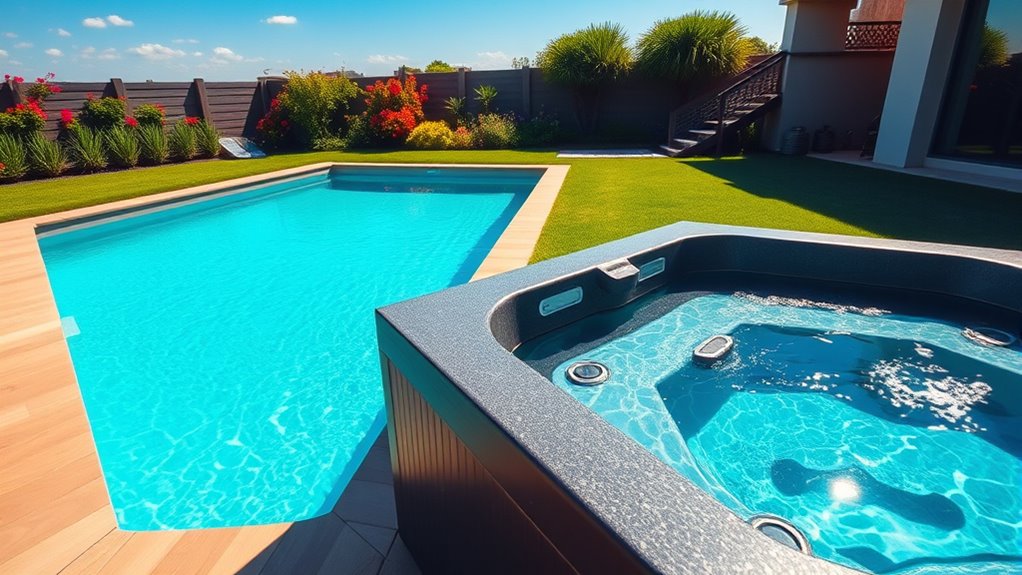

If you want to focus on year-round fitness, a swim spa might be your best choice, thanks to its controlled temperature, resistance features, and compact size suitable for smaller yards. A backyard pool offers more space for leisure and social activities but relies on weather and natural temperature. Both serve different needs, so think about your fitness goals, budget, and space. Keep exploring to find out which option aligns best with your lifestyle.

Get pool and patio gear delivered free with Prime
- Fast, free delivery on millions of items
- Prime Video, Amazon Music and more included
- Member-only deals all year
Key Takeaways
- Swim spas offer adjustable water currents for resistance training, enhancing workout effectiveness year-round.
- Backyard pools provide space for leisure and social activities but lack resistance features for fitness.
- Swim spas are more energy-efficient with controlled temperatures, reducing ongoing costs compared to traditional pools.
- Pools depend on weather and natural sunlight, limiting consistent indoor fitness routines.
- The initial investment for swim spas is higher but may offer better long-term value for dedicated fitness enthusiasts.

Choosing between a backyard pool and a swim spa depends on your lifestyle and space. If you’re looking for an option that promotes fitness and offers year-round use, a swim spa might be the better fit. However, if you prefer a traditional swimming experience with more space for relaxation, a backyard pool could be more suitable. One key factor to think about is water temperature. Swim spas typically have controlled temperature settings, allowing you to swim comfortably regardless of the season. This means you can work out in warmer water during winter or cooler water in summer, making your fitness routine more consistent. Backyard pools, on the other hand, often depend on natural sunlight and weather conditions to warm the water. While some pools have heaters, maintaining a consistent water temperature can increase energy consumption and costs. If you want to swim regularly without worrying about the cold or fluctuating temperatures, a swim spa offers better control and energy efficiency in this regard.
Energy consumption is another important aspect to weigh. Swim spas are designed with energy-efficient technology, including insulated shells and advanced heaters that minimize electricity use. Since they are smaller than traditional pools, they require less water and heating, which reduces ongoing energy expenses. In contrast, backyard pools generally involve higher energy consumption due to their larger size, the need for continuous filtration systems, and heating if you want warmer water. This can lead to higher utility bills over time. Additionally, because swim spas are built for resistance-based workouts, you often use them more consistently, which can justify their slightly higher upfront cost by saving money on energy in the long run.
In terms of fitness, a swim spa offers the advantage of adjustable water currents, allowing you to swim against resistance for a more intense workout. Its compact size means you can set it up in smaller yards without sacrificing space, and the controlled environment encourages regular exercise regardless of weather. Backyard pools, while great for leisure and social gatherings, don’t typically offer the same level of resistance training or controlled water temperature, which are important for structured fitness routines. Ultimately, your choice hinges on your fitness goals, budget, and how much you value control over water temperature and energy use. If your priority is consistent, efficient workouts year-round with minimal energy costs, a swim spa is a smart investment. But if you’re after a versatile space for leisure and occasional exercise, a backyard pool might suit you better.
energy-efficient swim spa with adjustable water currents
As an affiliate, we earn on qualifying purchases.
As an affiliate, we earn on qualifying purchases.
Frequently Asked Questions
Which Option Requires Less Maintenance Over Time?
When considering which requires less maintenance over time, a swim spa generally demands less chemical and aesthetic upkeep than a traditional backyard pool. Swim spas have smaller water volumes, making chemical balancing easier and quicker. Plus, their compact design simplifies cleaning and aesthetic maintenance. You’ll spend less time on chemical adjustments and upkeep tasks, so you can enjoy your fitness routines without the hassle of extensive maintenance.
Can Both Accommodate Aquatic Therapy Exercises Effectively?
Both backyard pools and swim spas can effectively accommodate aquatic therapy and offer exercise versatility. You’ll find that swim spas are especially suited for targeted aquatic therapy, thanks to their adjustable currents. Pools provide a broader space for various exercises, but may lack the specialized features of a swim spa. Either option supports your fitness goals with aquatic therapy, allowing you to customize workouts and enhance recovery routines.
What Are the Initial Installation Costs for Each?
When considering installation costs, you’ll find that backyard pools generally have higher upfront expenses, often due to larger size and more extensive groundwork. Swim spas tend to be more affordable initially, with lower installation costs because they’re smaller and easier to set up. Your upfront expenses depend on the size, features, and site preparation, but overall, swim spas usually offer a more budget-friendly option for those looking to minimize initial investments.
How Do Energy Costs Compare Between Pools and Swim Spas?
Did you know swim spas tend to be more energy-efficient than traditional pools? In the cost comparison, they typically use less power for heating and filtration, saving you money over time. While pools require more energy to maintain consistent water temperature, swim spas’ compact size and efficient systems help reduce ongoing energy costs. If you’re looking to cut expenses, a swim spa might be the smarter, more energy-efficient choice for your fitness needs.
Are There Size Restrictions for Installing Either Option?
When considering size restrictions, you need to check your local regulations and available space. Pool dimensions typically require larger areas, while swim spa size is more flexible and compact. You should measure your backyard carefully, ensuring there’s enough room for installation and safety clearances. Keep in mind that some areas may have specific restrictions, so consult your local building codes before planning your backyard upgrade.
Conclusion
Ultimately, choosing between a backyard pool and a swim spa depends on your fitness goals and space. Think of a pool as a spacious lake and a swim spa as a sleek, portable stream—you’ll find both serve your workout needs, just in different ways. Whether you want endless laps or a quick, versatile swim, both options keep you active. Pick the one that fits your lifestyle best and immerse yourself in your fitness journey with confidence.
Fall Picks
fall essentials
As an affiliate, we earn on qualifying purchases.