
To heat your small pool efficiently, consider solar panels for eco-friendly, low-cost operation if you have ample space and sunny weather, but they depend on sunlight and can be costly upfront. Alternatively, a heat pump provides quick, consistent warmth and works well in various climates, though it might be noisier and more expensive initially. Balancing these options against your climate, budget, and sustainability goals helps you choose the best solution—glance further for detailed insights.
Key Takeaways
- Solar panels offer sustainable, low-cost heating but depend on sunlight, reducing efficiency during cloudy days or winter.
- Heat pumps provide reliable, quick heating suitable for various climates, though they have higher upfront costs.
- Combining solar panels with heat pumps can optimize efficiency and reduce long-term energy expenses.
- Proper installation and maintenance of either system are essential to maximize performance and longevity.
- Consider climate, budget, and environmental goals to choose the most suitable and cost-effective heating option.
Heating a small pool efficiently requires careful planning and the right equipment. When you’re looking to extend your swimming season or maintain a comfortable temperature without skyrocketing your energy bills, exploring different heating options becomes essential. Two of the most popular and energy-efficient choices are solar panels and heat pumps. Each has its unique benefits and tradeoffs, so understanding how they work will help you make the best decision for your needs.
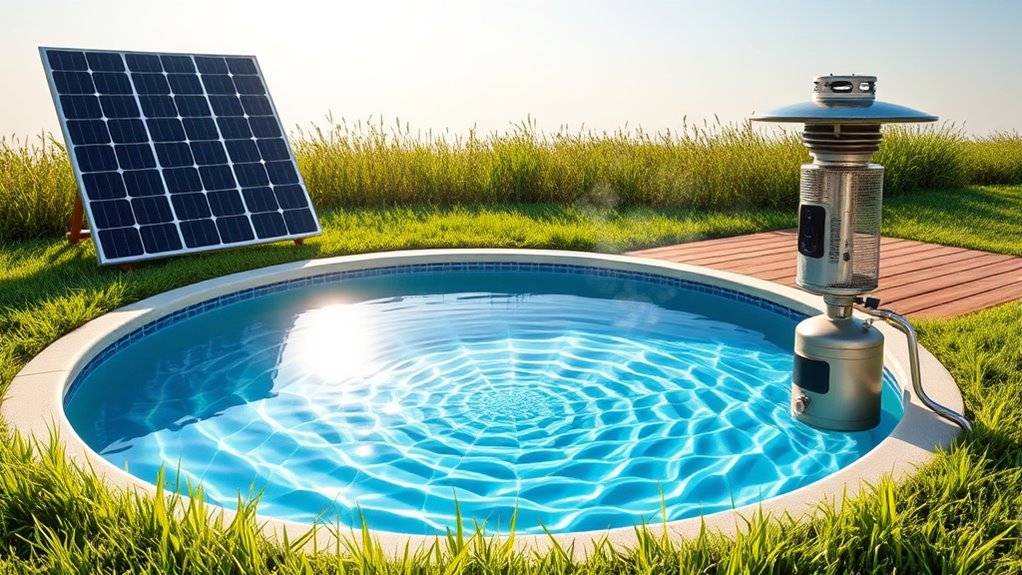
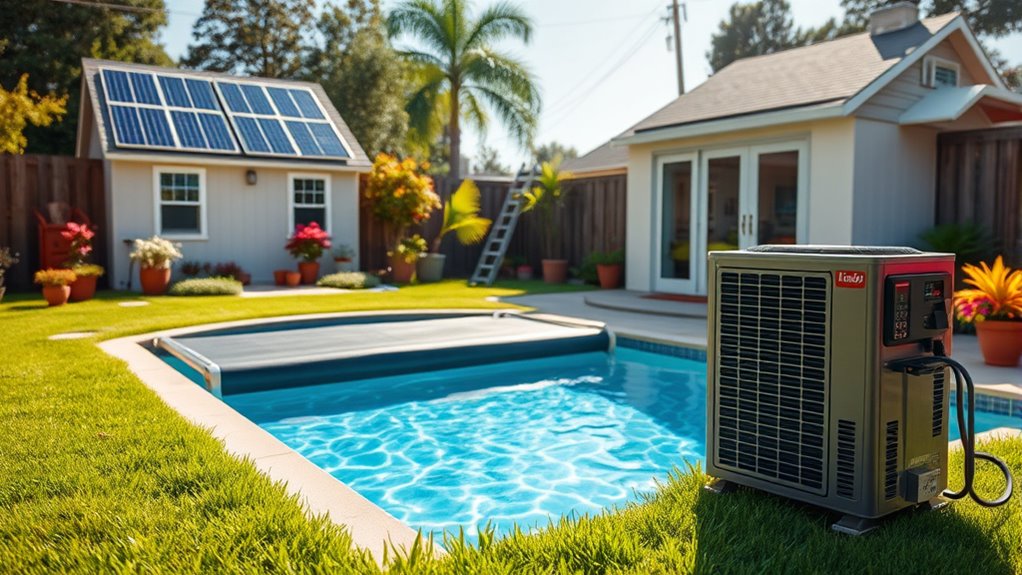
Solar panels are a fantastic eco-friendly option that harness the sun’s free energy to heat your pool. By installing solar collectors on your roof or nearby property, you can absorb sunlight and convert it into heat, transferring that warmth to your pool water through a circulation system. The main advantage of solar panels is their minimal operating cost once installed; they use renewable energy, so you won’t see ongoing electricity bills related to heating. Plus, they’re quiet, require little maintenance, and are environmentally sustainable. However, solar panels depend heavily on sunlight, so their effectiveness diminishes on cloudy days or during winter months. They typically require a significant upfront investment, and the installation process can be complex, especially if your property isn’t suitable for solar panel placement. If you live in a sunny climate and are committed to sustainable living, solar panels can be a reliable and cost-effective solution over time. Additionally, solar panel efficiency can be optimized through proper positioning and maintenance, enhancing overall performance.
Heat pumps, on the other hand, are an efficient mechanical alternative that works by extracting heat from the air outside your pool. They function similarly to air conditioners but in reverse, using electricity to transfer heat rather than generate it directly. Heat pumps are relatively easy to install and can quickly raise your pool’s temperature, providing consistent heating regardless of sunlight or weather conditions. They tend to be more energy-efficient than traditional electric heaters because they move heat rather than create it, which can save you money on energy bills. The main tradeoff is that heat pumps’ efficiency drops as the outdoor temperature drops, making them less effective in colder climates unless you invest in models designed for lower temperatures. Additionally, they do produce some noise during operation, and their initial cost can be higher than other electric heaters, but the savings in operating costs often compensate for this over time. Proper maintenance and choosing the right model for your climate can significantly improve their longevity and efficiency.
Frequently Asked Questions
What Is the Average Cost to Heat a Small Pool Annually?
You’ll typically spend around $300 to $1,000 annually to heat your small pool, depending on your heating method. A cost comparison shows that solar heaters are cheaper long-term but have a shorter equipment lifespan, while electric or gas heaters cost more upfront but last longer. Consider your usage frequency and budget to choose the best option, balancing initial costs versus ongoing expenses and maintenance.
How Long Does It Take to Heat a Small Pool to Desired Temperature?
It typically takes 24 to 48 hours to heat a small pool to your desired temperature, depending on factors like pool insulation and heater sizing. Good insulation helps retain heat, reducing heating time, while properly sized heaters ensure efficient warming without wasting energy. To speed up the process, consider using a solar cover to trap heat and minimize heat loss, making your pool comfortable sooner.
Are There Eco-Friendly Heating Options Suitable for Small Pools?
Did you know that solar thermal systems can cut a pool’s carbon footprint by up to 70%? You can choose eco-friendly options like solar thermal covers or heat pumps, which use renewable energy sources. Heat pumps extract warmth from the air, making them highly efficient even in cooler weather. These options not only reduce your environmental impact but also save you money on energy bills over time.
How Often Should a Small Pool Heater Be Maintained?
You should maintain your small pool heater at least once a year to guarantee peak performance and extend its lifespan. Regular maintenance, including inspecting and cleaning filters, checking for leaks, and testing the thermostat, helps prevent costly repairs. Depending on usage and environmental factors, more frequent inspections every few months may be needed. Proper maintenance frequency keeps your pool heater efficient, prolongs its lifespan, and ensures safe, reliable heating throughout the season.
Can Solar Covers Reduce Heating Costs Effectively?
Think of a solar cover like a blanket for your pool, trapping heat and reducing evaporation. Yes, solar covers can cut heating costs effectively by boosting solar efficiency, especially during sunny days. They also extend the cover’s lifespan by protecting the water’s surface from debris and weather. By using a solar cover consistently, you save energy and money, making it a smart, eco-friendly choice for maintaining your pool’s warmth.
Conclusion
Choosing the right heating option balances comfort and cost, much like balancing a delicate scale. While solar panels soak up the sun’s warmth, electric heaters offer instant heat like a cozy fire. Each method has its tradeoffs—sustainable but slow, quick but costly. By weighing these, you craft a warm oasis that feels like a summer day, even in cooler weather. Your pool becomes a inviting retreat, where efficiency and enjoyment coexist seamlessly.