To keep your swim spa in perfect shape, regularly test and balance your water’s pH, alkalinity, and sanitizer levels using test strips or kits. Clean filters and surfaces consistently to prevent debris buildup and algae. Inspect equipment like jets and pumps often to catch problems early. Maintaining proper chemical levels and routine cleaning extends equipment life and keeps water crystal-clear. Continue exploring for more expert tips to guarantee your mini-pool stays pristine year-round.
Key Takeaways
- Regularly test and adjust water chemistry, including pH, alkalinity, and sanitizer levels, to maintain clarity and safety.
- Clean or replace filters monthly and inspect equipment for leaks or unusual noises to ensure optimal operation.
- Maintain proper chemical balance to prevent algae growth, bacteria, and mineral buildup, extending equipment lifespan.
- Routinely clean the spa’s surfaces and skimmer areas with non-abrasive cleaners to prevent mold and deposits.
- Schedule proactive maintenance, including water testing and equipment checks, to ensure year-round pristine water and reliable performance.

Have you ever wondered what it takes to keep your swim spa clean and functioning smoothly? Maintaining your mini-pool isn’t just about draining and refilling; it’s about managing water chemistry and making sure your equipment stays in top shape. When water chemistry is balanced, your swim spa stays crystal clear, safe, and inviting. Proper chemical levels prevent algae growth, bacteria buildup, and cloudy water, making your swimming experience more enjoyable and hygienic. You’ll want to regularly test your water using test strips or a testing kit, checking for pH, alkalinity, and sanitizer levels. Keeping pH within the ideal range—usually between 7.2 and 7.8—is crucial for maximum water quality and to protect your equipment from corrosion or scaling. Adjusting chemicals as needed is straightforward, but consistency is key. By maintaining proper water chemistry, you extend the lifespan of your swim spa’s components and reduce the need for costly repairs. Additionally, choosing the right filtration system can greatly enhance water clarity and overall cleanliness.
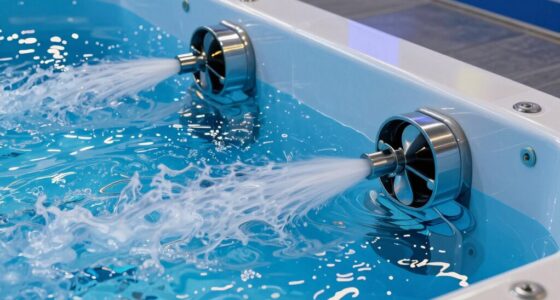
Equipment upkeep is equally important and involves routine cleaning and inspection. Your swim spa’s jets, filters, and pumps work together to circulate water and keep it clean. Regularly cleaning filters—either by rinsing or replacing them—is essential for proper filtration. Neglecting this step can cause clogs, reduced water flow, and dirt buildup that compromise water quality. Also, check your jets and pump for unusual noises or leaks; early detection prevents major malfunctions. Keep an eye on the skimmer and other intake areas to remove debris that can clog equipment and hinder circulation. Additionally, it’s wise to inspect the spa’s shell and surfaces for algae, mold, or mineral deposits and scrub them gently with non-abrasive cleaners. Proper equipment upkeep not only guarantees your swim spa runs efficiently but also prolongs its lifespan, saving you money in the long run.
Scheduling regular maintenance is your best strategy. Set reminders to test water chemistry weekly and perform filter cleanings monthly. Keep spare chemicals, filters, and tools handy so you’re never caught off guard. When you stay proactive with water chemistry and equipment upkeep, your swim spa remains in pristine condition, ready whenever you want to jump in. It’s a simple routine that yields big results—crystal-clear, safe water and reliable operation. Remember, maintaining your swim spa isn’t a one-time task but an ongoing process. With consistent care, you’ll enjoy a perfect mini-pool all season long, without the headaches of unexpected repairs or cloudy water. In the end, your effort keeps your swim spa a revitalizing retreat, always in peak condition for your enjoyment.
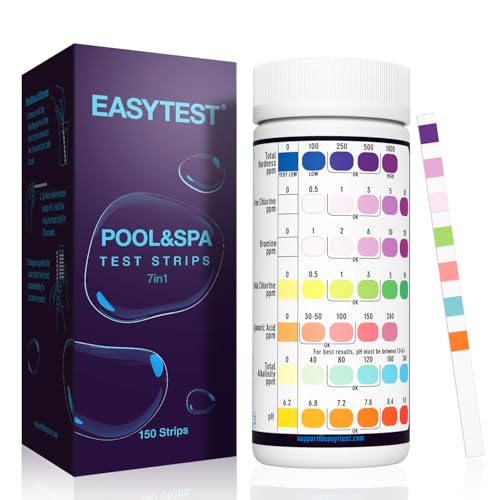
EASYTEST 7-Way Pool Test Strips, 150 Strips Water Test for Hot tub and Spa
- 150 Test Strips Included: Enough for multiple water tests
- Fast and Accurate Results: Soak for 1 second, read in 15 seconds
- 7-in-1 Water Testing: Tests Bromine, pH, Chlorine, Alkalinity, Hardness, Cyanuric Acid
As an affiliate, we earn on qualifying purchases.
As an affiliate, we earn on qualifying purchases.
Frequently Asked Questions
How Often Should I Replace the Water in My Swim Spa?
You should replace the water in your swim spa based on the water change frequency recommended by the manufacturer, usually every 3 to 6 months. Follow your water replacement schedule to guarantee peak cleanliness and water quality. Regularly test and balance the water, and drain and refill when needed. Doing so keeps your mini-pool safe, clear, and inviting, preventing buildup of contaminants and maintaining the best swimming experience.
What Are Signs of Algae Growth in a Swim Spa?
Algae growth can turn your pristine swim spa into a murky swamp overnight. Look out for algae detection signs like slimy surfaces or fuzzy patches clinging to the sides. Water discoloration is another major red flag—if your water looks green, cloudy, or has a strange tint, algae might be taking over. Catch these signs early, and you can stop algae from transforming your relaxing pool into a swampy mess.
Can I Use Saltwater Systems in My Mini-Pool?
Yes, you can use saltwater systems in your mini-pool. Saltwater benefits include softer water and fewer harsh chemicals, making it gentler on your skin and eyes. It also acts as a natural chlorine alternative, reducing chemical usage and maintenance. Just make certain your mini-pool equipment is compatible with saltwater systems, and follow proper installation and maintenance guidelines to keep your mini-pool clean and safe.
How Do Temperature Fluctuations Affect Spa Maintenance?
Temperature fluctuations can considerably impact your spa maintenance by disrupting temperature stability and thermal regulation. When temperatures vary, you may notice increased chemical imbalances, algae growth, or equipment strain. To keep your mini-pool in top shape, regularly monitor the water temperature, use a reliable cover, and install a heater or chiller if needed. Maintaining consistent temperatures helps you avoid costly repairs and keeps your spa inviting and safe.
Is Professional Cleaning Necessary for Routine Upkeep?
You might wonder if professional cleaning is necessary for routine upkeep. While DIY cleaning and chemical balancing are essential, hiring a professional can guarantee thorough cleaning and proper chemical levels. Professionals bring expertise to detect issues early, maintain ideal water quality, and extend your mini-pool’s lifespan. Regular professional cleaning complements your efforts, making maintenance easier and more effective, especially when dealing with temperature fluctuations that can affect your spa’s condition.
Conclusion
Keeping your swim spa sparkling is like tending a precious garden—you nurture it, and it rewards you with endless enjoyment. Regular maintenance isn’t just a chore; it’s the secret to a pristine, inviting oasis that beckons you whenever you need a refresh. So, stay vigilant, follow your routine, and watch your mini-paradise flourish. After all, isn’t life better when your personal retreat is always ready to welcome you home? Plunge in and enjoy the perfection!