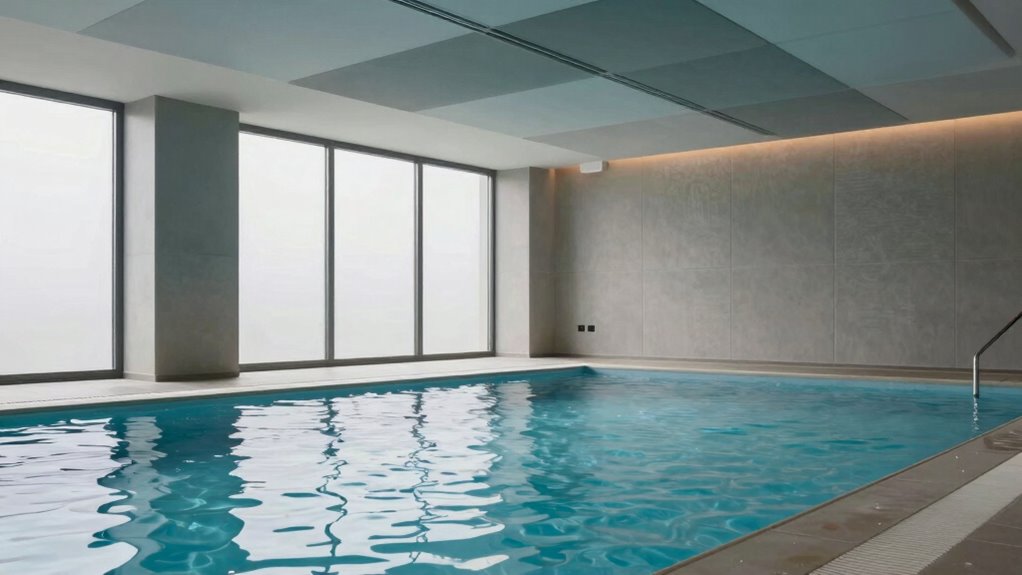
To keep your endless pool from humming, position equipment away from lounging areas and use vibration-absorbing pads underneath pumps and filters. Install barriers like fences or shrubs to block sound and add soundproofing materials nearby. Regularly maintain and inspect your equipment, adjusting water chemistry and pump speeds to reduce strain. Using anti-vibration mounts and enclosure options can further minimize noise. Continue exploring these tips to create a peaceful backyard oasis.
Key Takeaways
- Place equipment away from relaxation areas and use vibration-absorbing pads to minimize noise transmission.
- Incorporate sound-absorbing barriers like foam panels and outdoor rugs around noisy equipment.
- Use landscaping such as dense bushes or trees as natural sound barriers to block and absorb noise.
- Perform regular maintenance on pumps and filters to reduce vibrations and prevent excessive humming.
- Install enclosures or fences with dense materials to contain equipment noise and enhance overall soundproofing.
What Causes My Endless Pool to Hum? Normal or Not?
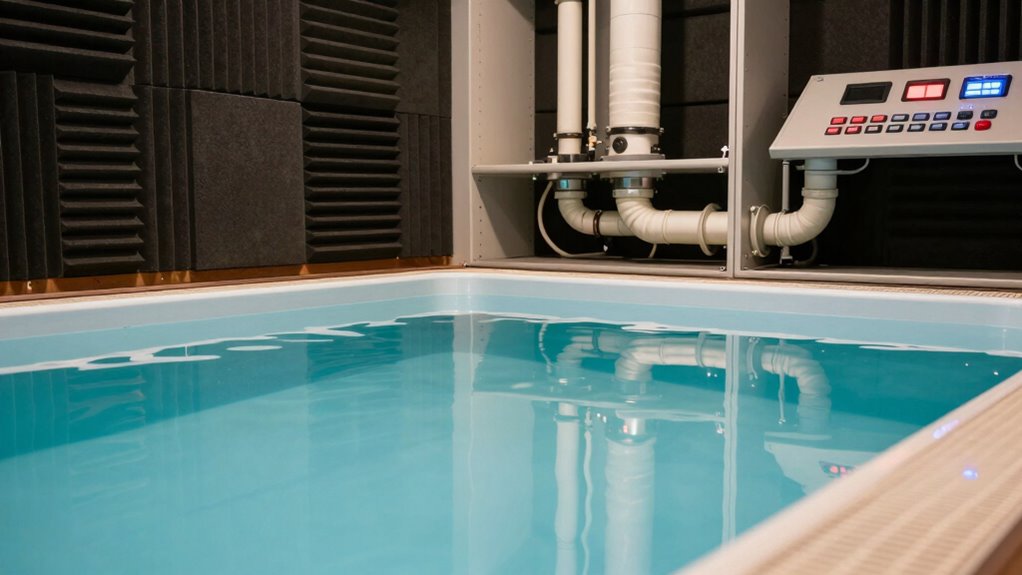
Your Endless Pool may produce a humming sound during operation, which is often normal, but it can also indicate a problem. Many times, this hum comes from the pump or filter system working to circulate water effectively. Sometimes, loose or vibrating pool accessories can cause additional noise, especially if they’re not securely attached. Changes in water chemistry can also contribute to unusual sounds, as imbalanced water may cause equipment to work harder, increasing noise levels. Regular maintenance helps ensure all components run smoothly, reducing excess humming. Additionally, pool hydraulics can influence noise levels by affecting water flow and pressure within the system. Proper equipment setup can also help minimize unnecessary noise during operation, and understanding system design can assist in identifying potential sources of excess noise. Being aware of noise mitigation techniques can further help in reducing unwanted sounds and maintaining a quiet operation.
How to Position Your Pool and Equipment for Quieter Operation
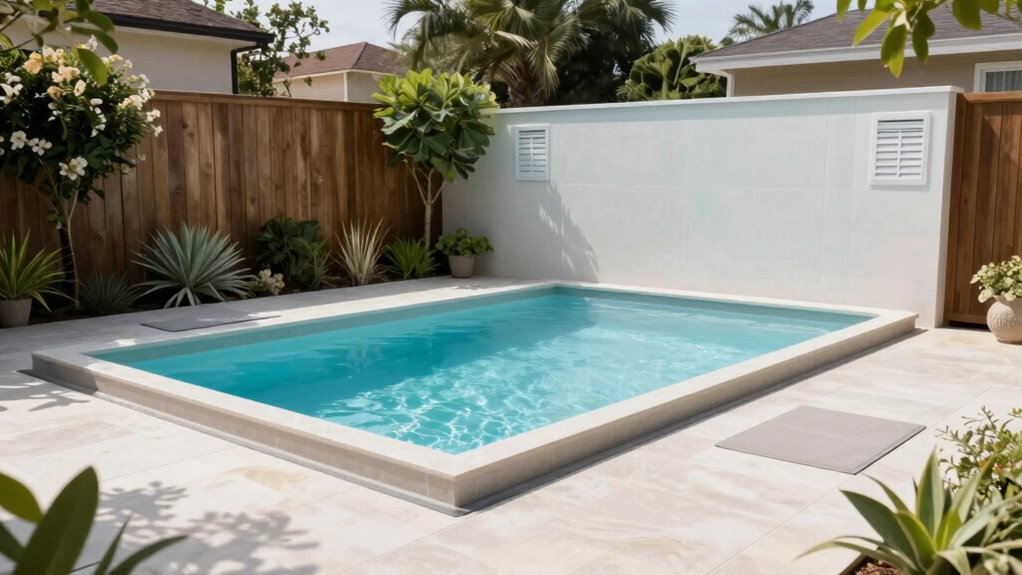
To keep your pool and equipment quieter, start by placing your pump and filter in a location that minimizes noise transfer. Adding sound-absorbing barriers around the equipment can further reduce sound levels. Proper positioning and barriers make a noticeable difference in creating a peaceful swimming environment. Additionally, implementing smart-home integrations can help monitor and control noise levels remotely for optimal comfort. Ensuring proper equipment maintenance also prevents excess noise caused by mechanical issues, maintaining a quieter operation over time. Choosing the right equipment placement can significantly enhance overall noise reduction efforts, and understanding how soundproofing techniques work can lead to more effective noise mitigation. Proper sound-absorbing materials can also be used to enhance existing barriers and improve noise control.
Optimal Equipment Placement
Properly positioning your pool equipment can considerably reduce noise levels around your backyard. Place pumps and filters away from lounging areas and bedrooms, ideally behind fences or shrubs. Elevate equipment on vibration-absorbing pads to minimize humming. Keep pool lighting and chemical balancing systems close enough for easy access but away from quiet zones. Use the following table to visualize effective placement strategies:
| Equipment Type | Optimal Placement Tips |
|---|---|
| Pool Lighting | Install away from seating areas to avoid light hums |
| Pumps & Filters | Position on vibration pads, away from walls and patios |
| Chemical Systems | Keep near the pool but in sound-absorbing enclosures |
| Water Features | Place away from relaxation zones to reduce noise spill |
Additionally, consider soundproofing materials or barriers around noisy equipment to further enhance backyard serenity. Proper installation techniques can also play a significant role in minimizing operational noise. Ensuring correct equipment placement is crucial for achieving a quieter backyard environment. Using noise-reducing barriers around loud equipment can make an even bigger difference in maintaining peaceful outdoor spaces.
Sound-Absorbing Barriers
Strategically positioning your pool and its equipment is essential for minimizing noise through effective sound absorption. You can reduce hums and rattles by adding sound-absorbing barriers around noisy components. Use barriers made of dense materials like foam, mass-loaded vinyl, or acoustic panels placed close to pumps and filters. These barriers help dampen vibrations and sound waves, preventing noise from traveling. Keep in mind that proper pool water chemistry and regular pool maintenance routines also contribute to quieter operation by preventing equipment strain and noise. To maximize effectiveness, ensure barriers are sealed tightly and positioned to block direct sound paths. Proper placement and maintenance create a quieter environment, making your pool experience more enjoyable.
How to Adjust Pool Settings to Reduce Unnecessary Noise
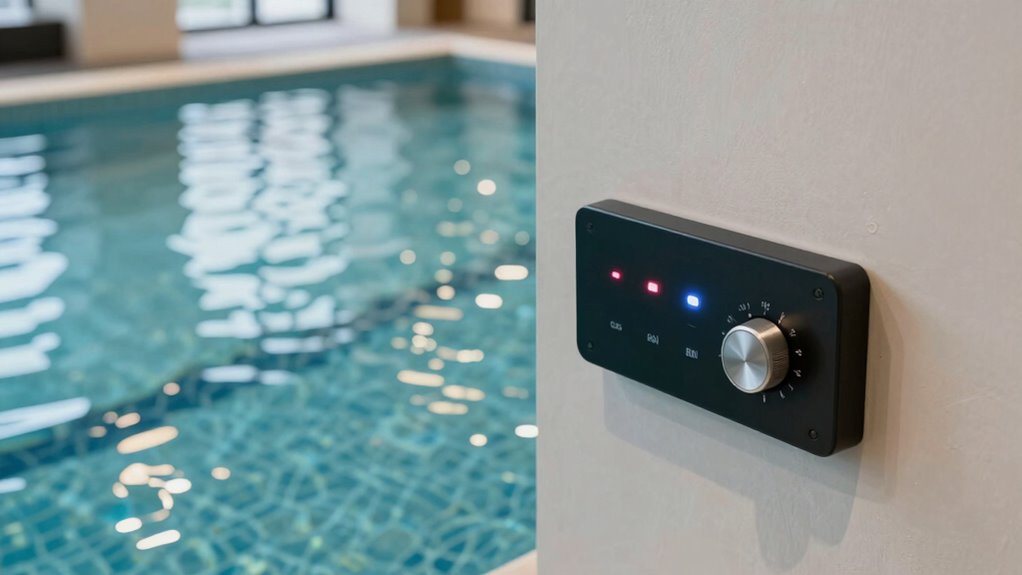
Adjusting your pool’s settings can substantially reduce unnecessary noise. Start by optimizing your filter cycle times; shorter cycles mean less constant operation and noise. Regular pool chemical maintenance ensures the equipment runs smoothly, preventing strain that can cause humming sounds. Check your pump speed—lower speeds often operate quietly while maintaining water quality. Additionally, consider outdoor lighting settings; dimming or scheduling lights to turn off during quiet hours minimizes electrical hums. Ensuring your equipment is properly calibrated and maintained prevents overworking, which reduces noise levels. Proper calibration and equipment maintenance also play a crucial role in maintaining optimal operation and minimizing noise. Regularly inspecting and monitoring your pool equipment helps identify issues early that could lead to increased noise, ensuring a quieter environment. Avoid unnecessary adjustments that force equipment into high-performance modes. Fine-tuning these settings helps keep your pool area peaceful, allowing you to enjoy your pool without the distracting hum of overused or poorly maintained equipment. Additionally, understanding how pool equipment operation impacts noise levels can guide you in making more informed adjustments. Being aware of noise sources within your system enables targeted mitigation strategies for a quieter pool experience.
Choosing Sound-Absorbing Materials for Pool Area and Equipment

To reduce noise around your pool, selecting the right sound-absorbing materials is essential. You should consider effective options like foam panels or outdoor rugs and place them strategically to maximize their impact. Proper placement can make a significant difference in minimizing disruptive sounds from equipment and surrounding areas. Incorporating air quality considerations, such as choosing materials that do not off-gas harmful chemicals, can also contribute to a healthier outdoor environment. Additionally, selecting eco-friendly soundproofing options can ensure your setup is sustainable and safe for your family and the environment. Using materials with sound-absorbing properties that are also environmentally safe can further enhance the effectiveness of your noise control efforts. Understanding the importance of craftsmanship in selecting high-quality materials can lead to better durability and performance. Selecting appropriate installation techniques can improve the overall performance of your soundproofing measures.
Effective Material Choices
Choosing the right sound-absorbing materials is essential for effectively controlling noise around your pool area and equipment. Your deck design and landscaping choices play a crucial role in reducing sound reflections and amplifications. To maximize noise control, consider materials that absorb sound waves rather than reflect them. Use textured, porous materials like outdoor rugs or rubber mats on your deck to dampen sound. Incorporate landscaping choices such as dense bushes, trees, or decorative fencing to absorb and block noise. Opt for acoustic panels or wall treatments designed specifically for outdoor use, strategically placed near noisy equipment. Understanding soundproofing techniques can further enhance your efforts by providing additional methods to reduce noise transmission.
Strategic Placement Techniques
Strategic placement of sound-absorbing materials can substantially reduce noise from your pool area and equipment. Position soft materials like foam panels or outdoor rugs around noisy sources, such as the pump or water circulation system. Use a pool cover when the pool isn’t in use to contain sound and reduce humming. Place barriers behind equipment to reflect sound away from seating areas. Carefully consider the layout, ensuring that sound waves are absorbed or deflected to minimize disturbance. Proper placement makes a noticeable difference in creating a peaceful environment. To visualize, consider the table below:
| Area | Material Choice | Placement Tips |
|---|---|---|
| Pump Equipment | Soundproof foam panels | Behind or around for absorption |
| Pool Cover | Insulating material | Cover when not in use |
| Water Circulation | Acoustic barriers | Near pipes and filters |
| Seating Area | Outdoor rugs or curtains | Absorb ambient noise |
| Surroundings | Dense shrubbery or fences | Block external noise |
How to Soundproof Your Pool Area With Enclosures and Barriers

Enclosing your pool area with soundproof barriers is an effective way to reduce noise travel. You can build fences or walls with dense materials like acoustic panels or mass-loaded vinyl to block sound. Incorporate garden landscaping, such as tall shrubs or trees, to absorb and deflect noise further. Adding enclosures around your pool not only minimizes humming but also enhances privacy and safety. Consider integrating pool lighting into your setup to create a relaxing ambiance without increasing noise levels. Properly designed barriers can substantially diminish the hum from your Endless Pool, making your outdoor space more enjoyable. Focus on combining solid enclosures with natural elements for maximum noise reduction and visual appeal, transforming your pool area into a peaceful retreat.
Tips for Regular Maintenance to Keep Noise Levels Low

Regular maintenance is essential to keep your Endless Pool operating quietly and efficiently. Consistently check and maintain proper pool chemical balancing to prevent equipment strain and reduce noise caused by buildup or corrosion. Regular testing of pH, alkalinity, and sanitizer levels ensures the system runs smoothly. Seasonal maintenance is also crucial; before peak use, clean filters, inspect pumps, and replace worn parts to avoid mechanical issues that generate noise. Keep the water level ideal to prevent pump cavitation. Clear any debris from the skimmer and pump baskets. By staying on top of these tasks, you minimize vibrations and mechanical sounds, ensuring your pool remains peaceful and quiet. Proper upkeep not only prolongs your equipment’s lifespan but also maintains a serene swimming environment.
Using Anti-Vibration Pads and Mounts to Cut Mechanical Noise
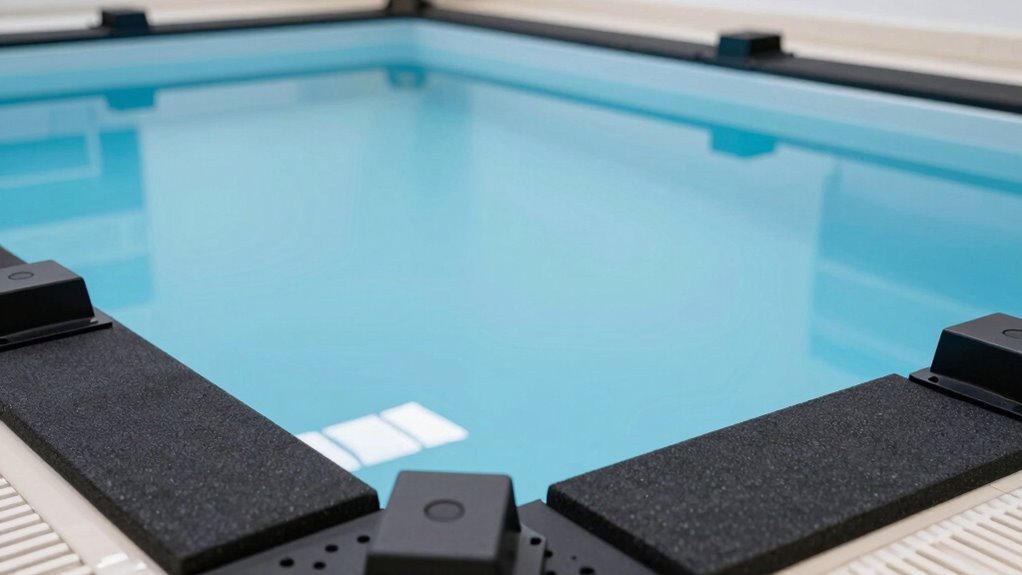
One effective way to reduce mechanical noise from your Endless Pool is by using anti-vibration pads and mounts. These materials absorb vibrations from the pump and motor, preventing them from transmitting through the floor or walls. Proper placement of these pads under the equipment can markedly lessen humming sounds. Remember, a well-maintained pool cover helps contain noise and reduces water evaporation, which can impact water chemistry. To maximize noise reduction, consider these tips:
- Use high-quality anti-vibration pads tailored for pool equipment.
- Mount pumps on vibration-dampening bases or mounts to isolate sound.
- Ensure your pool cover fits snugly to minimize external noise interference.
Implementing these measures creates a quieter environment, making your endless swimming experience more enjoyable.
Troubleshooting Common Pool Hum Issues and Quick Fixes

Even with anti-vibration pads and mounts in place, you might still notice a persistent humming noise from your Endless Pool. First, check your pool’s water chemistry—imbalances can cause equipment to work harder and hum louder. Also, ensure your pool cleaning system isn’t clogged, as debris can strain the pump and increase noise. Here’s a visual to help identify the issue:
| Symptom | Quick Fix |
|---|---|
| Persistent humming | Adjust water chemistry, balance pH |
| Unusual vibrations | Tighten loose fittings or mounts |
| Excessive noise during | Clean filters and check pump operation |
| water circulation | |
| Sudden loud hum | Inspect for debris or blockages |
Addressing these areas quickly restores quiet and keeps your pool running smoothly.
How to Keep Your Backyard Quiet Despite the Pool’s Hum

Although your pool’s hum can be noticeable, you can take simple steps to keep your backyard peaceful. First, strategically position garden lighting to direct attention away from the noise source, creating a calming ambiance. Second, choose quiet, cushioned poolside furniture to absorb some of the sound and reduce echoes. Finally, consider installing sound barriers like fencing or planting dense greenery around your pool area, which can markedly muffle the hum. Using these techniques, you’ll minimize the pool’s noise impact, making your outdoor space more relaxing. Remember, combining visual distractions like lighting and soft furnishings with physical barriers helps create a serene environment where the hum doesn’t dominate your backyard experience.
Frequently Asked Questions
What Are the Signs of a Failing Pool Pump Causing Excessive Noise?
You’ll notice your pool pump making loud, unusual noises like grinding, squealing, or rattling during noise troubleshooting. These sounds often indicate worn-out bearings, loose parts, or debris causing strain. If the noise persists despite basic pool pump maintenance, it’s a sign that your pump may be failing. Address these issues promptly to prevent further damage, and remember to regularly check for debris and lubricate moving parts to keep it running smoothly.
Can Weather Conditions Influence the Noise Level of My Endless Pool?
Weather conditions can turn your pool area into a symphony or a whisper. Rain, wind, and temperature swings can amplify noise levels, making your pool sound louder. To keep the volume in check, add pool insulation and soundproof barriers around your Endless Pool. These tools act like a blanket, muffling the outdoor elements and preventing weather from turning your peaceful oasis into a noisy concert.
Are There Specific Brands Known for Quieter Pool Equipment?
Yes, some brands are known for quieter pool equipment, offering better quiet operation and a more peaceful experience. Brands like Jacuzzi and Pentair have a strong reputation for producing reliable, low-noise pumps and filtration systems. When choosing equipment, look for those with positive reviews focused on noise levels and durability. Your goal should be to select a brand with a solid reputation for quiet operation, ensuring your pool remains peaceful and enjoyable.
How Does the Type of Pool Cover Affect Noise Reduction?
Imagine your pool cover as a silent guardian, muffling noise like a whisper in a cathedral. The type of cover you choose markedly impacts noise reduction through cover material and insulation effectiveness. Thicker, insulated covers made from high-quality materials absorb vibrations better, reducing hums and clatter. By selecting a cover designed for superior insulation, you create a quieter, more peaceful environment, turning your pool area into a tranquil retreat.
Is It Necessary to Hire a Professional for Noise Assessment and Mitigation?
You don’t necessarily need to hire a professional for noise assessment and mitigation, but it can help if noise issues persist. While you focus on pool cleaning and maintaining water chemistry, a professional can identify specific sources of noise and suggest effective solutions. They might recommend equipment upgrades or soundproofing techniques, guaranteeing your pool operates quietly. Investing in expert advice can save you time and ensure a peaceful, enjoyable swimming environment.
Conclusion
Think of your pool as a symphony—you want the harmony, not the hum. By following these tips, you can turn down the volume and enjoy your backyard oasis in peace. With a few tweaks and some regular care, your endless pool will hum just enough to remind you it’s alive, but not so loud it drowns out your favorite sounds. Keep the noise in check, and let your backyard be the tranquil escape you deserve.