
To keep your pool crystal clear, you need to test water regularly and keep key levels in check. Focus on balancing pH (7.2-7.8), alkalinity, and calcium hardness, while adding chlorine or other sanitizers to kill bacteria and algae. Proper filtration and circulation help keep water clean. Shocking your pool occasionally and fixing issues early prevent cloudiness and algae. If you want simple steps to master pool chemistry, continue exploring more tips and techniques.
Key Takeaways
- Regularly test water pH, alkalinity, and sanitizer levels to maintain proper water balance and clarity.
- Keep chemicals like chlorine and stabilizers at recommended levels to prevent algae and bacteria growth.
- Maintain clean filters and proper circulation to ensure even chemical distribution and clear water.
- Shock the pool periodically to eliminate organic contaminants and keep water sparkling.
- Consistently monitor and adjust chemical levels to prevent cloudy water and ensure safe swimming conditions.
Understanding Pool Water Basics
Understanding pool water basics is essential for maintaining a safe and inviting swimming environment. You need to know that water quality depends on factors like pH, alkalinity, and calcium hardness. These elements influence how clean your pool stays and how comfortable it feels when you swim. Proper balance prevents issues like cloudy water, algae growth, and corrosion of pool equipment. You’ll also want to keep an eye on water temperature, which affects swimmer comfort and chemical effectiveness. Regular testing with a reliable kit helps you track these levels. Monitoring the water chemistry and understanding how different elements interact can help you prevent costly repairs and maintain optimal water quality. When you understand how your pool water works, you can take simple steps to keep it crystal-clear and safe for everyone. Mastering these basics forms the foundation for effective pool maintenance.
The Role of Chemicals in Pool Maintenance
Chemicals play a vital role in keeping your pool safe and inviting. By balancing pH levels, you prevent irritation and equipment damage, while proper sanitization kills bacteria and keeps the water clear. Understanding how these chemicals work together helps you maintain a healthy, sparkling pool with less hassle. Additionally, using appropriate test kits ensures accurate measurements and effective chemical adjustments for optimal water quality.
Balancing Ph Levels
Have you ever wondered why maintaining the right pH level is essential for a safe and inviting pool? Your pH level affects water comfort, equipment longevity, and chemical effectiveness. If it’s too low, the water becomes acidic, causing skin irritation and damaging pool surfaces. If it’s too high, water turns cloudy, and algae can thrive. To keep balance, you need to test your water regularly using a test kit or strips. Ideally, your pH should stay between 7.2 and 7.6. If it’s outside this range, add pH increasers or decreasers accordingly. Proper pH balance ensures your chemicals work correctly, making your pool safer and more enjoyable. Regular testing and adjusting keep your water crystal clear and inviting for every swim. Maintaining optimal water chemistry helps prevent issues like algae growth and equipment corrosion, ensuring a healthy swimming environment.
Sanitizing Water Effectively
Maintaining proper pH levels helps your chemicals work effectively, but adding the right disinfectants is key to keeping your pool safe. Chlorine is the most common sanitizer, killing bacteria and algae quickly. You can use tablets, liquid, or granules, depending on your preference. Regularly testing your water ensures you maintain the right chlorine levels—around 1 to 3 ppm. If chlorine drops too low, bacteria can grow, making your water unsafe. You might also consider alternative sanitizers like bromine or mineral systems, but chlorine remains the most reliable. Always follow manufacturer instructions for dosing and safety. Consistent sanitizing prevents cloudy water, algae growth, and potential health risks, ensuring your pool stays crystal-clear and inviting for every swim. Proper water sanitation is essential for maintaining a healthy swimming environment.
How to Test Your Pool Water Effectively
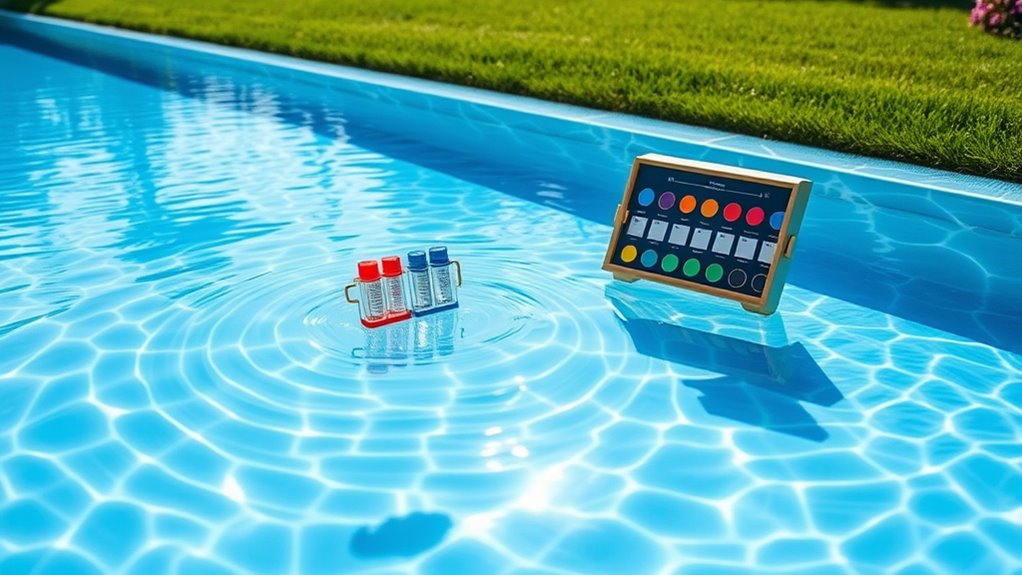
To guarantee your pool water stays clean and healthy, you need to test it regularly and accurately. Proper testing helps you catch issues early and maintain the right chemical balance. Use test strips or liquid test kits for quick results. Dip a strip into the water or add a few drops to a sample, then compare the colors to the chart. Keep a log of your test results to track trends over time. Here’s a quick overview:
| Test Type | Frequency | What It Measures |
|---|---|---|
| Test Strips | 2-3 times weekly | Chlorine, pH, alkalinity |
| Liquid Kits | Weekly or as needed | pH, chlorine, stabilizer levels |
| Digital Tester | Monthly or weekly | Precise chemical readings |
| Visual Checks | Daily | Clarity and water appearance |
| Professional Tests | Quarterly | Extensive water analysis |
Consistent testing keeps your pool crystal clear. Regular testing is also essential for understanding pool chemistry and maintaining a safe swimming environment.
Balancing Ph, Alkalinity, and Calcium Hardness
To keep your pool water healthy and clear, you need to balance the pH, alkalinity, and calcium hardness. When these levels are off, your water can become cloudy, corrosive, or scale-forming. Adjusting each one properly ensures a safe, comfortable swimming environment. Maintaining proper water chemistry is essential for preventing issues like scaling and corrosion that can damage your pool equipment.
Maintaining Proper Ph Balance
Ever wondered why your pool water sometimes feels off or cloudy? Maintaining proper pH balance is key to clear, inviting water. When pH is too low, your water can become acidic, causing irritation and corrosion. Too high, and it turns alkaline, leading to cloudy water and scaling. Regular testing helps you stay on top of your pH levels, ideally between 7.2 and 7.8. When needed, add pH increasers or decreasers to keep things balanced. Proper pH ensures sanitizer effectiveness, protects your equipment, and keeps your pool inviting. Understanding the role of eco-friendly products can also help reduce your environmental impact.
Adjusting Alkalinity and Hardness
Maintaining proper pH levels is just one part of keeping your pool water balanced; adjusting alkalinity and calcium hardness is equally important. Alkalinity acts as a buffer, preventing pH from fluctuating too much. To raise alkalinity, add sodium bicarbonate (baking soda) gradually, testing often. Calcium hardness measures the calcium in your water; too high can cause cloudy water and scaling, while too low leads to corrosion. To increase hardness, add calcium chloride carefully, following product instructions. If hardness is too high, you may need to dilute the water or partially drain and refill the pool. Regular testing ensures these levels stay within the ideal ranges, helping your pool stay clear, balanced, and comfortable for swimmers.
Shocking Your Pool and Maintaining Cleanliness
Shocking your pool is an essential step to quickly eradicate algae, bacteria, and organic contaminants that can cloud your water and cause odors. When you shock your pool, you give it a powerful boost of chlorine or non-chlorine oxidizer, which destroys stubborn dirt and bacteria. This process restores clarity and ensures a safe, inviting environment. Regular shocking also helps maintain the long-term health of your pool equipment and water quality.
- Feel confident knowing your water is pure and safe
- Enjoy crystal-clear water that sparkles in the sun
- Prevent unpleasant odors from taking over your backyard
- Protect your family from harmful bacteria and algae
- Keep your pool looking pristine all season long
Regular shocking makes pool maintenance easier, saves you time, and keeps your water invigorating. Don’t wait for problems—act proactively to maintain cleanliness and enjoy endless, revitalizing swims.
Tips for Ongoing Pool Care and Troubleshooting
After shocking your pool to eliminate contaminants, ongoing care becomes key to keeping your water pristine and balanced. Regularly test your water with test strips or a kit to monitor pH, chlorine, alkalinity, and stabilizer levels. Adjust chemicals as needed to maintain proper balance—aim for a pH of 7.4-7.6 and chlorine between 1-3 ppm. Clean your filter regularly to ensure proper circulation and avoid buildup. Keep an eye out for cloudy water, algae, or unusual odors, which can signal issues. If these problems occur, backwash or clean your filter, check chemical levels, and shock the pool if necessary. Consistent maintenance and prompt troubleshooting help prevent bigger problems, saving you time and effort while keeping your water crystal-clear. Maintaining proper water chemistry is essential for preventing algae growth and ensuring safe swimming conditions.
Frequently Asked Questions
How Often Should I Replace My Pool Water Entirely?
You should replace your pool water entirely every 3 to 5 years, depending on usage and water quality. Regular maintenance, such as balancing chemicals, filtering, and cleaning, can extend this timeframe. If you notice persistent cloudiness, algae growth, or strong odors, it’s a sign to drain and refill sooner. Keep an eye on water clarity and chemistry levels to determine the best timing for a complete water change.
What Are Natural Alternatives to Chemical Pool Treatments?
Natural alternatives to chemical treatments are like a breath of fresh air for your pool. You can use mineral sanitizers, like copper or silver, to keep bacteria at bay, or try saltwater systems that produce chlorine naturally. Enzymes and UV sterilizers also help break down organic matter without harsh chemicals. These options create a healthier, eco-friendly environment, making your pool a safe haven without relying solely on traditional chemicals.
Can I Use Household Products to Balance Pool Water?
You shouldn’t use household products to balance your pool water. Household items like vinegar or baking soda aren’t formulated for pools and can cause imbalances or damage your equipment. Instead, stick to proper pool chemicals like pH adjusters, algaecides, and sanitizers from reputable brands. Regular testing with a reliable kit helps you keep the water balanced and clear without risking damage or health issues.
How Do Weather Changes Affect My Pool’s Chemistry?
Weather changes can markedly impact your pool’s chemistry. When it’s hot and sunny, your water evaporates faster, concentrating chemicals and raising pH levels, so you need to add more stabilizer and adjust pH accordingly. Cooler or cloudy days reduce evaporation, but rain can dilute chemicals and introduce debris, requiring you to test and balance your water more frequently. Keep an eye on weather patterns and test your water regularly to maintain clarity.
What Signs Indicate My Pool’s Water Chemistry Is Unsafe?
If your pool water turns cloudy or develops a strong chemical odor, it’s a clear sign your water chemistry is unsafe. You might also notice skin irritation, eye redness, or algae growth. These signs indicate imbalanced pH levels or high contaminants. Don’t overlook these cues; instead, test your water immediately and adjust chemicals as needed. Keeping an eye on these signs helps prevent health risks and ensures your pool remains safe and inviting.
Conclusion
Now that you know the basics of pool chemistry, keeping your water crystal-clear becomes second nature. Regular testing, balancing chemicals, and staying on top of cleanliness are your keys to a perfect pool. Imagine stepping into inviting, pristine water after a quick check—doesn’t that make all your efforts worth it? With a little practice, you’ll enjoy endless hours of invigorating, sparkling water, turning your pool into the ultimate oasis all season long.