
TL;DR
A Country Living report describes five ways gardeners can reuse suitable cardboard: suppressing weeds, preparing soil, making paths, adding compost browns and placing collars around brassicas. The advice comes from gardening and packaging contributors; results depend on using clean, plain cardboard and applying it appropriately.
Country Living has outlined five ways gardeners can reuse plain cardboard: cover beds to suppress weeds, prepare soil, make a mulched path, add material to compost and place collars around brassica plants. The report includes advice from gardening and packaging contributors, and cautions that cardboard should be clean, untreated and used without tape or other packaging materials.

Get pool and patio gear delivered free with Prime
- Fast, free delivery on millions of items
- Prime Video, Amazon Music and more included
- Member-only deals all year
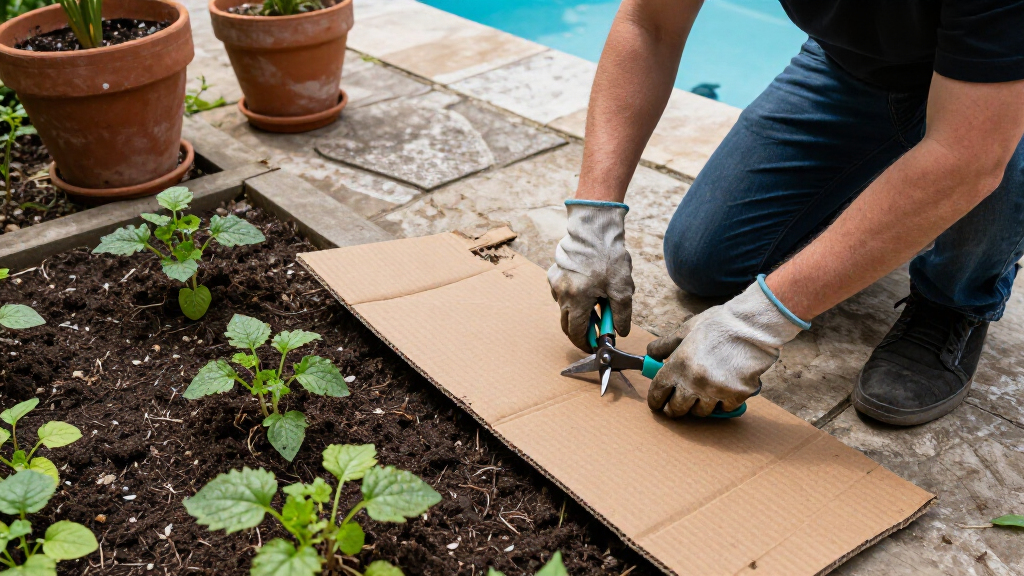
For weed control and bed preparation, the report advises removing large weeds, stones and thick stems, then laying overlapping sheets of brown cardboard directly on the soil. Wetting the sheets helps hold them in place; a covering of compost, shredded leaves, bark or other organic mulch can then be added. Loren Taylor, owner of Outdoor Fountains Pro, said autumn can be a useful time to cover an empty bed while soil remains warm and weeds slow down, giving the cardboard time to soften before spring.
The other suggested uses are to cover a planned garden path and top it with wood chips or bark; line the gaps in a mesh or pallet compost bin; and add crumpled or shredded cardboard to a compost heap as a source of “browns,” alongside other garden reuse ideas like repurposing plastic storage bins. The report also describes cutting a 6- to 8-inch-wide collar with a slit in the middle and placing it around a brassica plant to help deter cabbage root fly. In windy areas, it says stones can hold the collar down.
Material choice matters, according to Tom Schott, managing director of Schott Packaging. The report recommends plain brown cardboard with minimal printing and says to remove tape, labels, staples and plastic. Schott advises against glossy, laminated, waxed or heavily coated packaging, and says cardboard contaminated with oil or chemicals should not be used in the garden.
Where Cardboard Can Replace Other Materials
These methods offer gardeners ways to reuse suitable packaging while handling common tasks such as covering bare soil, forming informal paths and balancing compost ingredients. For people preparing beds, the report presents cardboard as a potential alternative to some digging and a way to cover soil between growing seasons.
The guidance is practical rather than a measured trial: the source does not report comparative results for weed reduction, soil improvement or pest control. The value for readers is in the specific uses and the cautions about cardboard type, coverage and placement, not a guarantee that every method will work in every garden.
Products Worth Considering

Sonos One (Gen 2) Voice-Controlled Smart Speaker, White

iRobot Roomba 415X Robot Vacuum & Mop Combo

Ring Alarm 8-Piece Home Security System Kit
As an affiliate, we earn on qualifying purchases.
Autumn Bed Preparation Advice
The report presents autumn as a suitable period for covering empty beds because, according to Taylor, soil is still warm while weed growth is beginning to slow. Cardboard laid then has time to soften before spring planting. The advice is specifically about empty or newly prepared areas, including flower and vegetable beds, rather than placing cardboard indiscriminately around established plants.
Cardboard breaks down over time, but the report does not give a fixed breakdown period. Schott says standard cardboard is more appropriate because it can gradually decompose, unlike coated varieties made to handle moisture differently. The article also warns against piling sheets against tree trunks or plant stems and against using an excessively thick layer, which Taylor says may slow water movement and take too long to break down.
“A few overlapping sheets are usually enough.”
— Loren Taylor, owner of Outdoor Fountains Pro, as quoted by Country Living
Limits of the Cardboard Guidance
The supplied report does not provide test results comparing cardboard with other weed-control or soil-preparation methods, nor does it quantify how much cardboard is needed for different bed sizes. Its statements about soil organisms, soil improvement and deterring cabbage root fly are expert guidance quoted by the publication, not outcomes documented through a trial in the material provided.
Conditions such as rainfall, soil type, cardboard thickness and mulch choice may affect how quickly sheets break down and how well they stay in place. The report also does not specify how often cardboard collars should be checked or replaced. Gardeners should avoid material whose prior use or contamination is uncertain.
Check Materials Before Garden Use
Before using boxes, gardeners can remove all tape, labels, staples and plastic, and set aside coated or contaminated packaging. For bed covering, the report recommends overlapping a few sheets, wetting them and adding organic mulch; for compost, it suggests using crumpled or shredded pieces as a brown ingredient. The guidance offers no further scheduled update or follow-up trial.
After application, gardeners can watch for sheets shifting, water failing to pass through as expected, or cardboard remaining thick against plant stems. The source does not prescribe a monitoring schedule, so those checks are practical precautions rather than a quoted requirement.
Key Questions
What kind of cardboard is suitable for garden use?
The report recommends plain brown cardboard with minimal printing. Remove tape, labels, staples and plastic, and avoid glossy, laminated, waxed or heavily coated packaging.
How do you use cardboard to cover weeds?
Remove large weeds and debris, lay a few overlapping sheets on the soil, wet them to help keep them in place, then cover them with compost, leaves, bark or another organic mulch.
Can cardboard go in a compost heap?
Yes, the report suggests adding crumpled or shredded cardboard as a “browns” ingredient. It can also line gaps in some mesh or pallet compost bins, where it will gradually break down.
Can cardboard help protect brassicas from cabbage root fly?
The report describes a 6- to 8-inch-wide collar around the plant base as a way to help deter the fly. It does not provide trial results or claim the method guarantees protection.
Which cardboard should not be used?
Avoid cardboard that is oil- or chemical-contaminated, or whose prior contents are unknown. The report recommends recycling uncertain or unsuitable packaging through the appropriate waste stream.
Source: rss