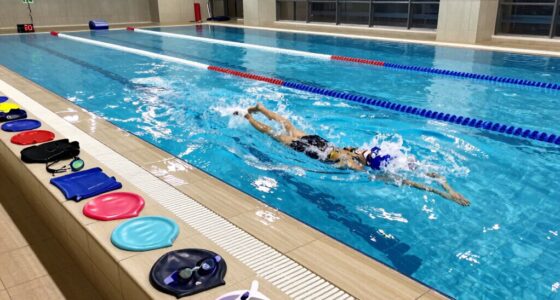
To guarantee your lap pool stays clear and safe, you should aim for a turnover rate of about 4 to 6 hours, meaning the entire water volume passes through the filter within that timeframe. Proper filtration keeps water free of contaminants and supports balanced chemistry. Regularly monitor flow rates and adjust your schedule as needed. Keeping this balance in check helps maintain ideal water quality—continue exploring for detailed tips to keep your pool in top condition.

Get pool and patio gear delivered free — and shop member deals
- Fast, free delivery on millions of items
- Access to Prime Big Deal Days deals on October 6–7
- Prime Video, Amazon Music and more included
Key Takeaways
- The recommended turnover rate for lap pools is typically between 4 to 6 hours.
- Ensuring proper filtration involves regular filter checks, cleaning, or media replacement.
- Monitoring pump flow rates with gauges helps maintain optimal circulation and efficiency.
- Proper water chemistry balance supports filtration effectiveness and water clarity.
- Adjusting filtration schedules based on system performance ensures consistent water quality.
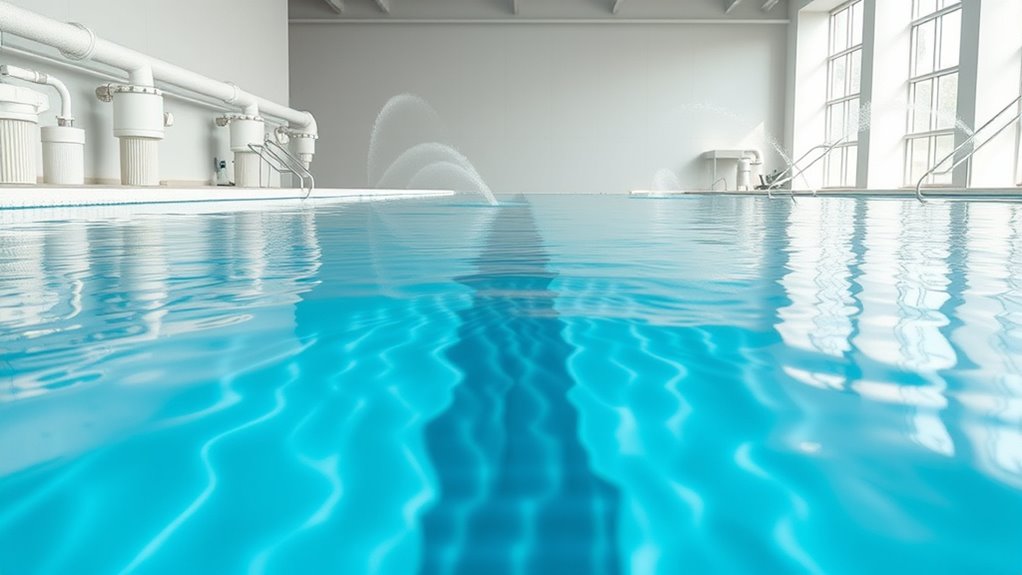
Have you ever wondered how lap pools stay clean and safe for swimmers? It all comes down to managing pool water chemistry and ensuring proper filtration system maintenance. Maintaining the right balance of chemicals like chlorine and pH levels keeps bacteria and algae at bay, but it’s equally important to keep the filtration system in top shape. Without proper filtration, even the best chemical treatments won’t be enough to keep the water clear and healthy.
Your pool’s filtration system is responsible for removing debris, dirt, and microscopic contaminants that can cloud the water or pose health risks. Regular filtration system maintenance involves checking filters for clogs, cleaning or replacing filter media as needed, and ensuring pumps operate efficiently. When filters aren’t maintained properly, particles can accumulate, reducing water clarity and increasing the demand for chemicals. This can lead to imbalanced pool water chemistry, which not only affects swimmer comfort but also promotes microbial growth. That’s why routine inspections and timely filter cleaning are critical parts of keeping your lap pool safe and inviting.
Regular filter checks and cleaning keep water clear, safe, and free of harmful contaminants.
The effectiveness of your filtration system also depends on your pool’s turnover rate—the amount of time it takes for the entire volume of pool water to pass through the filter. For lap pools, a common recommendation is to aim for a turnover rate of about 4 to 6 hours. This means that within that time frame, all the water in your pool should be circulated and filtered once. Achieving this rate ensures contaminants are consistently removed, chemicals are evenly distributed, and water remains clear. It’s worth noting that if your turnover rate is too slow, debris can settle and bacteria can proliferate, compromising water quality. Conversely, if it’s too fast, the system might be overtaxed, leading to increased wear on equipment and higher energy costs.
To keep your turnover rate ideal, you’ll need to regularly monitor your pump’s flow rate and adjust your filtration schedule accordingly. Using flow meters or pressure gauges can help you determine if your system is operating efficiently. Remember, maintaining proper pool water chemistry is interconnected with your filtration efforts—imbalances in pH or sanitizer levels can strain your filtration system and reduce its effectiveness. Proper filtration system maintenance is essential for optimal performance and energy efficiency. Regular testing and adjustment of chemicals, combined with diligent filtration system maintenance, will ensure your lap pool remains safe, clean, and ready for use. Ultimately, staying attentive to these details helps you provide a healthy environment for swimmers and prolongs the lifespan of your pool’s equipment.
As an affiliate, we earn on qualifying purchases.
Frequently Asked Questions
How Often Should I Replace the Pool Filter?
You should replace your pool filter every 1 to 3 years, depending on usage and maintenance. Regularly check your filter’s performance and clean it to maintain proper equipment maintenance. Keep your pool’s chemical balance in check to reduce strain on the filter. If you notice decreased flow or cloudy water, it’s time for a replacement to guarantee peak filtration and keep your lap pool clean and safe.
What Are the Signs of Inadequate Filtration?
If your lap pool looks more like a swamp than a crystal-clear haven, you’ve got signs of inadequate filtration. Water clarity diminishes, and you notice murky or cloudy water. Plus, if the chemical balance is off and algae blooms appear, it’s time to check your filter. Ignoring these signs risks poor water quality and potential health hazards, so give your filtration system some love before your swim turns into a swamp adventure.
Can Filtration Rates Impact Swimmer Health?
Yes, filtration rates can impact your health by affecting chlorine levels and water clarity. If filtration is too low, contaminants and bacteria may accumulate, leading to poor water quality and increased health risks. Insufficient filtration can cause chlorine levels to fluctuate, reducing its effectiveness in disinfecting the water. Clear, well-filtered water guarantees safer swimming conditions, helping you avoid skin irritation, infections, and other health issues.
Are There Energy-Efficient Filtration Options?
You can definitely choose energy-efficient filtration options like eco-friendly systems and variable speed pumps. Some might worry about higher upfront costs, but these systems save you money over time through lower energy bills. Eco-friendly systems reduce chemical use and environmental impact, while variable speed pumps adjust energy consumption based on demand. Switching to these options helps you maintain a clean pool efficiently, saving energy and supporting sustainability efforts.
How Does Pool Size Affect Turnover Rate Calculations?
You’ll find that larger pool volume requires longer turnover times, as the turnover calculation considers the volume of water that needs filtering. For bigger pools, you need a more powerful filter or more time between filtration cycles to guarantee water cleanliness. By adjusting your turnover rate based on pool size, you can maintain ideal water quality, ensuring effective filtration and a safe swimming environment.
Conclusion
To keep your lap pool shining and inviting, maintaining proper filtration and turnover rates is like giving it a gentle, consistent gust of fresh air. When you stay attentive to these details, you help guarantee the water remains clear and welcoming, creating a space where every swim feels effortless. Remember, a little routine care goes a long way—think of it as giving your pool a quiet, reassuring hug that keeps it happy and healthy for years to come.
Fall Picks
fall essentials
As an affiliate, we earn on qualifying purchases.