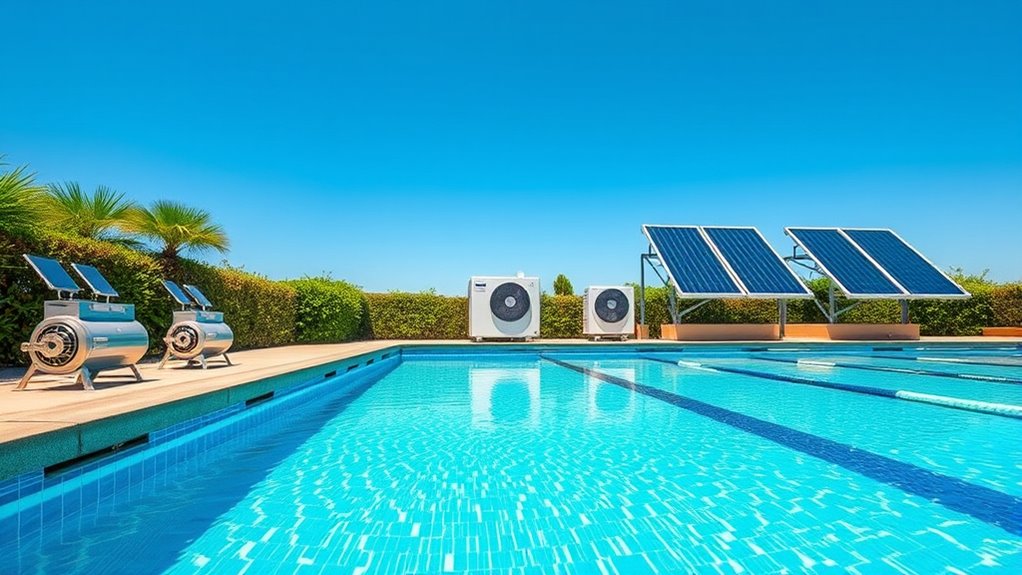

When choosing a heating system for your lap pool, consider gas heaters for quick warm-ups but expect higher energy costs and more maintenance. Heat pumps are energy-efficient and operate quietly, perfect for year-round use, though they have higher upfront costs. Solar options reduce energy bills and are eco-friendly, but depend on sunlight and require some initial investment. Keep exploring to discover which system best suits your needs and budget.
Key Takeaways
- Gas heaters provide rapid heating but require frequent maintenance and higher energy consumption.
- Solar heating systems are eco-friendly, cost-effective long-term, but depend on sunlight and need regular collector checks.
- Heat pumps are energy-efficient, operate quietly year-round, and need periodic inspection of mechanical parts and refrigerant.
- Initial setup costs vary: solar and heat pumps are more expensive upfront but offer substantial long-term savings.
- Maintenance needs differ: gas heaters require regular cleaning, while solar systems need minimal upkeep, and heat pumps need refrigerant checks.

When it comes to maintaining a comfortable swimming environment, choosing the right heating system for your lap pool is vital. Your decision affects not only your swimming comfort but also your energy bills and long-term maintenance. If you’re considering gas heaters, it’s important to understand their benefits and responsibilities. Gas heaters are known for their rapid heating capabilities, making them ideal if you want quick warm-ups. However, they require regular gas heater maintenance to keep them running efficiently and safely. Over time, burners and filters need cleaning, and inspections should be scheduled to prevent leaks or malfunctions. Proper maintenance guarantees your gas heater continues to operate efficiently, which is essential since they tend to consume more energy than other options.
On the other hand, solar heating systems offer an eco-friendly alternative that can considerably cut your energy costs. Solar efficiency is a key factor here—your system’s ability to convert sunlight into heat depends on the size and placement of the solar collectors. Ideally, the collectors should face the sun directly and be free of shading. While solar can be highly effective in sunny climates, you’ll want to consider backup heating options for cloudy days or cooler seasons. Investing in a solar pool heater can yield long-term savings, but initial setup costs can be substantial. Still, once installed, solar energy is free, and ongoing maintenance tends to be minimal compared to gas systems. Regular checks of the collectors and the circulating pump can help maintain peak efficiency, ensuring you get the most out of your solar investment.
Heat pumps are another popular choice, offering a balance between energy efficiency and convenience. They work by extracting heat from the air and transferring it to your pool water, which makes them more energy-efficient than gas heaters, especially in moderate climates. Heat pumps don’t require the same level of maintenance as gas heaters, but they do need periodic inspections of the fan and refrigerant levels to keep performance at its best. They operate quietly and efficiently, making them a good all-around choice for year-round comfort. Although their initial costs might be higher than gas heaters, the reduced energy consumption can lead to savings over time. Plus, they produce no emissions, making them an environmentally friendly option.

Raypak 206,000 BTU Digital Electronic Ignition Natural Gas Pool Heater
- Weather-Resistant Design: Suitable for various weather conditions
- Safe Pilot Ignition: Intermittent spark pilot safety controls
- Energy-Efficient Operation: Pilot only activates when heating needed
As an affiliate, we earn on qualifying purchases.
As an affiliate, we earn on qualifying purchases.
Frequently Asked Questions
How Do Energy Costs Compare Among Gas, Heat Pump, and Solar Heaters?
You’ll find that solar heaters have the lowest ongoing energy costs due to free sunlight, offering excellent cost comparison and energy efficiency. Heat pumps are more affordable than gas heaters, providing good efficiency and lower operating expenses. Gas heaters tend to have higher energy costs because of fuel prices, making them less economical over time. For the best energy efficiency and cost savings, solar or heat pump options are your top choices.
What Maintenance Is Required for Each Heating Option?
You’ll find each heater type requires some tender loving care. Gas heaters need regular inspections to guarantee safe operation, while heat pumps benefit from cleaning filters monthly to maintain efficiency. Solar heaters are quite low-maintenance, mainly needing occasional panel checks. With proper upkeep, you’ll extend your heater’s longevity, reduce maintenance frequency, and keep your lap pool perfectly heated without worry. Consistent care ensures your investment keeps performing beautifully for years to come.
Can These Heating Systems Be Used Simultaneously?
Yes, you can use hybrid systems to combine different heating options for peak energy efficiency. For example, a gas heater can quickly warm your pool, while a heat pump or solar system maintains the temperature efficiently over time. By integrating these systems, you maximize energy use, reduce costs, and guarantee consistent comfort. Just make sure your equipment is compatible and properly configured for seamless operation and maximum energy optimization.
How Do Climate Conditions Affect Solar Pool Heating Efficiency?
Climate impact markedly influences solar pool heating efficiency. In sunny, warm climates, solar systems perform best, providing ample energy and maintaining comfortable temperatures. However, in cloudy or colder regions, solar efficiency drops due to reduced sunlight exposure, leading to less effective heating. You’ll find that understanding your local climate helps optimize your solar pool heater’s performance, ensuring you get the most out of your investment regardless of weather conditions.
What Are the Initial Installation Costs for Each Heating Method?
You’ll find that installation costs vary considerably among heating options. Gas heaters generally have a higher upfront investment due to complex setup and equipment, while heat pumps tend to be more affordable initially. Solar heating has the lowest upfront costs but requires installing panels and possibly additional infrastructure. Your choice depends on your budget and long-term savings, but consider the initial investment for each to make an informed decision.
Conclusion
When choosing a heating option for your lap pool, consider energy efficiency and long-term costs. Solar heating can cut energy bills by up to 70%, making it a smart eco-friendly choice. Gas heaters warm your pool quickly but may be pricier to operate. Heat pumps strike a balance, offering efficiency and affordability. Ultimately, selecting the right system depends on your budget and priorities, but investing in energy-efficient options like solar can save you money and reduce your carbon footprint in the long run.