
Integrating a swim current system into your lap pool lets you customize water flow for realistic open-water training and resistance workouts. To do this successfully, you’ll need to evaluate hydrodynamics, water chemistry, and structural modifications, often best handled by experienced professionals. Proper planning ensures smooth flow, safety, and durability, turning your pool into an engaging, versatile training space. Keep exploring to discover essential tips for a seamless, effective setup that maximizes your swimming experience.
Key Takeaways
- Assess pool space and structural capacity to accommodate the swim current system without compromising existing features.
- Collaborate with professionals to analyze hydrodynamics and determine optimal placement for smooth water flow.
- Ensure proper water chemistry management to prevent corrosion and maintain system durability.
- Plan for electrical and plumbing requirements, including potential modifications to support system installation.
- Prioritize safety and functionality by integrating the system seamlessly, minimizing turbulence and maximizing swimmer comfort.
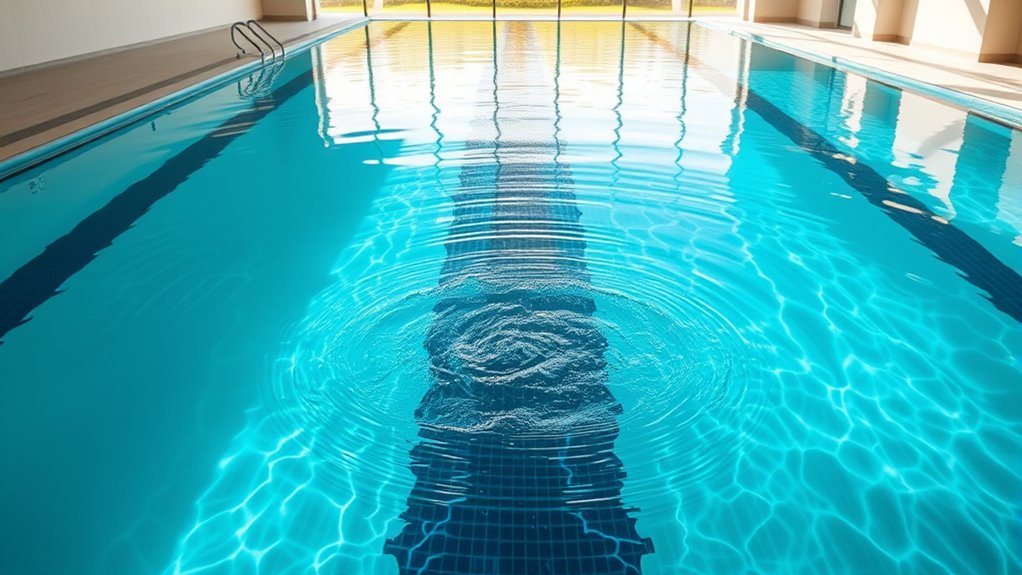
Integrating swim current systems into your pool design can substantially enhance the swimming experience by providing a continuous, adjustable flow of water. This feature allows you to simulate open-water conditions or create a resistant environment perfect for training without needing a large outdoor space. When planning to incorporate these systems, understanding the hydrodynamic effects is essential. The way water moves within your pool impacts flow patterns, turbulence, and overall swimmer comfort. A well-designed system ensures smooth, laminar flows that don’t cause excessive turbulence or discomfort, allowing you to focus on your workout. Poorly designed or improperly positioned systems can generate chaotic water currents, which may disrupt your swimming rhythm or even pose safety concerns. Hence, studying the hydrodynamic effects during the design phase helps maximize flow pathways and guarantees a balanced water environment. Additionally, considering water chemistry is important to maintain optimal water quality and prevent corrosion or fouling of the system components. However, integrating swim current systems isn’t without its challenges. Installation challenges often arise from space constraints, structural considerations, and existing pool configurations. For example, retrofitting an existing lap pool to include a swim current system might require significant modifications to the pool’s plumbing and structural elements. You might need reinforced walls or specific fittings to accommodate the equipment, which could lead to increased costs and longer installation times. Additionally, confirming that the system’s placement doesn’t interfere with other pool features or compromise the pool’s structural integrity requires careful planning. You’ll also need to contemplate electrical requirements and maintenance accessibility. Properly addressing these installation challenges upfront can prevent costly modifications later and help you achieve a seamless integration. Working with experienced professionals can help overcome installation challenges, ensuring that the system is both effective and durable. They can analyze your pool’s hydrodynamics, recommend ideal placement, and address structural or electrical considerations. By doing so, you’ll maximize the benefits of the swim current system, enjoying a dynamic, efficient, and safe swimming environment.
Frequently Asked Questions
What Is the Average Lifespan of a Swim Current System?
A swim current system typically lasts around 8 to 12 years, depending on its system durability and how well you maintain it. Technological advancements have led to more durable components, extending lifespan and improving performance. To maximize your system’s longevity, regularly inspect and service it, and choose models with the latest features. Proper maintenance guarantees you get the most out of your investment and enjoy reliable, consistent swimming experiences for years to come.
How Much Does Installation Typically Cost?
Installation costs for swim current systems typically range from $5,000 to $15,000, depending on your pool’s size and the system’s features. System pricing varies based on the brand, power, and customization options you choose. To get an accurate estimate, consider consulting with a professional installer who can assess your pool and recommend the best setup within your budget. Keep in mind that higher-end models may have higher installation costs but offer more advanced features.
Can Existing Pools Be Retrofitted With Swim Current Systems?
Yes, you can retrofit your pool with a swim current system. With thoughtful water circulation and clever customization, existing pools can be converted efficiently. You’ll need to assess your pool’s size, structure, and setup, but many systems are adaptable for retrofitting. This process transforms your traditional pool into a versatile, vibrant venue for water workouts, turning ordinary into extraordinary with seamless system swaps and streamlined installation.
What Maintenance Is Required for Optimal Performance?
To keep your swim current system running smoothly, you need to perform regular filter maintenance and system calibration. Clean the filters frequently to prevent debris buildup, guaranteeing ideal water flow. Also, check and calibrate the system periodically to maintain the desired current strength and consistency. By staying on top of these tasks, you’ll guarantee your swim current system operates efficiently, providing a great workout every time you swim.
Are There Safety Features Integrated Into These Systems?
Yes, swim current systems come with safety features and system safeguards to maintain your safety. These include emergency shut-off buttons, low-flow options, and automatic system shut-downs if irregularities are detected. Some models also have safety alarms and protective covers. These features ensure you can enjoy your workout with peace of mind, knowing that the system is designed to prevent accidents and respond quickly to any issues.
Conclusion
So, after all the effort to integrate swim current systems, you might think you’ll finally enjoy endless laps without leaving the pool. Ironically, the real challenge isn’t installing these systems but resisting the temptation to turn your workout into an endless, addictive chase. Now, you’ve got the perfect setup—just don’t forget to step out before you forget why you started. After all, too much of a good thing can turn your tranquil lap pool into a never-ending treadmill.