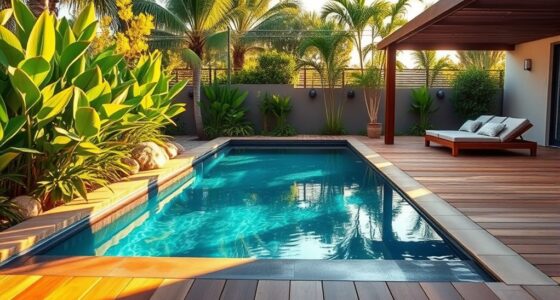
To maximize solar gain for your outdoor lap pool, position it facing south or southeast to capture the most sunlight, especially during peak hours. Avoid shady spots caused by trees or structures, and consider natural or built windbreaks like fences or shrubs to reduce cooling breezes. Proper orientation combined with wind protection can keep your pool warmer with less artificial heating, helping you maintain a comfortable temperature year-round. Keep exploring for more tips to enhance your pool’s efficiency.
Key Takeaways
- Orient the pool facing south or southeast in the northern hemisphere to maximize solar exposure and warmth.
- Minimize shading from trees, structures, or fences to improve solar gain and maintain higher water temperatures.
- Use windbreaks like fences or shrubs to reduce wind cooling and evaporation, enhancing heat retention.
- Position the pool in a sheltered location to minimize wind impact and optimize solar warmth throughout the year.
- Consider seasonal sun angles to adjust shading and orientation for consistent solar gain during different times of the year.
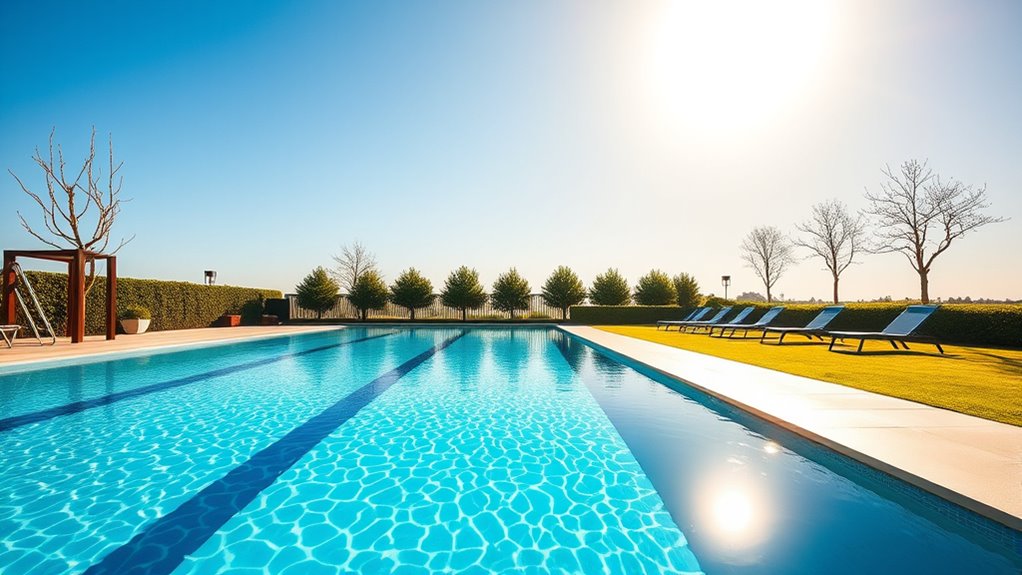
Have you ever wondered how sunlight can warm your home or power your energy needs? The same principles apply when it comes to outdoor lap pools, where optimizing solar gain can make your swimming experience more enjoyable and energy-efficient. Solar gain factors play a vital role in determining how much sunlight your pool receives throughout the day. These factors include the pool’s orientation, the surrounding landscape, nearby structures, and the local climate. Properly aligning your pool to maximize exposure to the sun can substantially increase water temperature, reducing reliance on heaters and lowering energy costs.
When considering orientation, positioning your pool to face south or southeast typically captures the most sunlight, especially in the northern hemisphere. This way, the pool benefits from consistent solar exposure during peak daylight hours. Conversely, avoiding shady areas caused by trees, buildings, or fences ensures your pool remains warm longer. Shading strategies are essential to balance sun exposure with comfort and safety. While shade can help prevent overheating on very hot days, excessive shading might diminish solar gain, making your pool less warm and more dependent on artificial heating. You can implement shading strategies such as strategically planting trees or installing pergolas with adjustable shading panels to control sunlight exposure as needed.
Another consideration is the angle of the sun throughout different seasons. During summer, the sun is higher in the sky, so ensuring your pool’s orientation takes advantage of this height can maximize solar gain. In winter, the lower sun angle means that positioning the pool to capture the low winter sun becomes more important if you want to keep the water comfortably warm without extra energy. Wind also influences solar gain by increasing evaporation and cooling the water. Positioning your pool in a sheltered spot or using windbreaks like fences or shrubs can help retain heat and improve overall warmth. Additionally, understanding the local climate can guide you in selecting the optimal location and shading options to enhance energy efficiency year-round.
outdoor solar pool cover
As an affiliate, we earn on qualifying purchases.
As an affiliate, we earn on qualifying purchases.
Frequently Asked Questions
How Does Surrounding Landscaping Affect Solar Gain?
Surrounding landscaping considerably impacts solar gain by providing shade trees and windbreaks. Shade trees block direct sunlight, reducing heat and preventing the pool from overheating. Windbreaks, on the other hand, protect against cold winds, helping retain warmth around your pool. You can strategically position trees and barriers to optimize solar gain, ensuring your outdoor lap pool stays comfortable and energy-efficient throughout the seasons.
What Materials Best Retain Heat in Outdoor Pools?
Think of your pool as a cozy bonfire—certain materials keep the warmth glowing longer. You should opt for thermal insulation and high-quality pool cover materials, like foam or solar blankets, which trap heat like a protective shield. These materials act as a warm blanket, preventing heat from escaping and maintaining comfortable water temperatures. By choosing the right options, you’ll enjoy a longer swim season with less energy loss.
How Often Should Pool Covers Be Used for Efficiency?
You should use your pool cover consistently, ideally whenever the pool isn’t in use, to maximize efficiency. Regular pool cover maintenance guarantees it stays effective, preventing debris and algae buildup. During the off-season, seasonal cover usage protects your pool from the elements and reduces heat loss. By maintaining and using your cover properly, you’ll save energy, reduce heating costs, and keep your pool cleaner and warmer for longer periods.
Can Solar Gain Influence Pool Water Chemistry?
Solar gain can influence your pool water chemistry by increasing water temperature, which boosts evaporation and alters pH levels. If you install solar panels for heat retention, they can further elevate water temperature and affect chemical balance. The warmer water may encourage algae growth and shorten chemical lifespan, so regularly monitor pH and chlorine levels. Proper maintenance guarantees your pool stays clean and safe, even with increased solar gain.
What Are the Cost Implications of Optimizing Solar Gain?
Optimizing solar gain involves higher installation expenses due to specialized equipment like angled covers or reflective surfaces, but it can lower your ongoing energy costs markedly. Conduct a thorough cost analysis to weigh initial installation expenses against long-term savings on heating. While upfront costs may seem steep, the reduced energy consumption can make it a worthwhile investment, especially in sunny climates where maximizing solar gain enhances pool efficiency.
windbreak fencing for pools
As an affiliate, we earn on qualifying purchases.
As an affiliate, we earn on qualifying purchases.
Conclusion
By thoughtfully considering the orientation and wind patterns around your outdoor lap pool, you create a welcoming oasis that gently embraces you. When you align your pool with the sun’s warmth and embrace the breeze’s whisper, you foster a space of serenity and renewal. These subtle choices nurture an environment where every swim feels like a soothing retreat, inviting you to unwind and reconnect with nature’s quiet kindness.
solar pool heater panels
As an affiliate, we earn on qualifying purchases.
As an affiliate, we earn on qualifying purchases.
adjustable shade pergola for pools
As an affiliate, we earn on qualifying purchases.
As an affiliate, we earn on qualifying purchases.