The biggest benefit of ozone for pools that most people miss is its ability to naturally and effectively destroy bacteria, viruses, and organic contaminants without relying heavily on chemicals like chlorine. It improves water clarity, reduces chemical smell, and creates a safer environment for swimmers. Plus, it lowers long-term maintenance costs by decreasing chemical use. If you’re curious about how ozone can transform your pool experience, there’s more to discover just ahead.
Key Takeaways
- The major benefit is ozone’s ability to drastically reduce chemical use, leading to safer, more natural water with fewer harsh chemicals.
- Many overlook ozone’s oxidation power, which rapidly destroys bacteria, viruses, and organic contaminants for cleaner, clearer water.
- Ozone enhances water quality and safety without compromising equipment, saving money on chemical purchases and maintenance over time.
- Proper ozone system setup and maintenance are crucial to maximize benefits and ensure safety—many miss this critical aspect.
- The most significant benefit is creating a healthier, more enjoyable swimming environment with less chemical odor, irritation, and environmental impact.
How Does Ozone Sanitize Pool Water and Keep It Safe?

Ozone sanitizes pool water by rapidly destroying bacteria, viruses, and other contaminants through a powerful oxidation process. When you introduce ozone into your pool, it reacts with impurities, breaking down organic matter and pathogens efficiently. This process aids your pool equipment by reducing the burden on traditional chemical disinfectants, helping maintain balanced water chemistry. Additionally, oxidation process ensures contaminants are neutralized before they can multiply, decreasing the need for excessive chlorine or other chemicals. Effective oxidation is crucial for maintaining high water quality and safety standards in modern pools. By integrating innovative solutions, you enjoy cleaner, safer water with fewer chemical residues. Properly integrated into your pool system, ozone enhances overall water quality without compromising your equipment’s performance. This makes maintaining healthy water chemistry easier, ensuring your pool remains fresh, safe, and inviting for everyone to enjoy. Pool water treatment plays a vital role in achieving this balance, making ozone an increasingly popular choice among pool owners.
What Is the Main Hidden Benefit of Using Ozone in Your Pool?
While ozone’s powerful oxidation abilities are well-known for cleaning your pool water, its main hidden benefit lies in how it contributes to long-term cost savings. Using ozone reduces the need for excessive chemicals, which can damage pool surfaces and affect aesthetics over time. Chemical reduction not only saves money but also minimizes the environmental impact of pool maintenance. Additionally, ozone systems often require less chemical balancing, making ongoing upkeep more straightforward and cost-effective. Proper ozone implementation can also improve water circulation, ensuring a more uniform distribution of treatments and reducing dead spots. Efficient water flow helps prevent buildup of contaminants and maintains clarity. Plus, once you’ve installed ozone systems, maintenance becomes simpler and less expensive. Here are three key benefits:
- Improved pool aesthetics due to clearer, more sparkling water.
- Lower chemical bills, saving you money each season.
- Reduced need for frequent chemical adjustments, prolonging equipment lifespan.
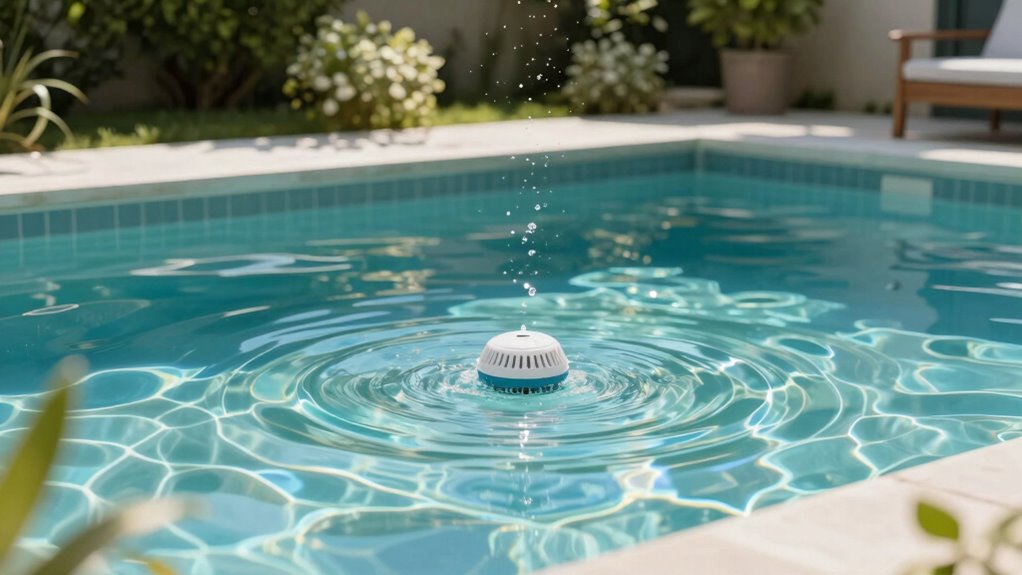
- Additionally, ozone promotes free floating in your pool, helping distribute water treatments evenly and prevent stagnation.
Investing in ozone installation not only enhances water quality but also keeps your pool looking its best without costly chemical dependency. The hidden savings add up, making ozone an economical choice for pool owners focused on beauty and efficiency.
How Ozone Reduces Chemicals and Improves Water Quality

By actively breaking down bacteria, viruses, and organic contaminants, ozone markedly reduces the reliance on chemical disinfectants in your pool. This natural process enhances water clarity and safety without adding excessive chemicals. Ozone is an eco-friendly alternative that minimizes the need for traditional chlorine or bromine, lowering chemical runoff and potential skin irritation. It creates a cleaner, healthier environment, making your pool water safer and more enjoyable. Additionally, ozone is a cost-effective solution because it decreases the amount of chemicals you need to buy and apply regularly. With less chemical use, you also spend less time maintaining and balancing water chemistry. Proper air quality management in your pool area can further enhance safety and comfort. Advances in navigation and mapping technology are also improving the efficiency of pool-cleaning robots, ensuring thorough coverage and minimal maintenance. Moreover, ozone can help reduce water waste by extending the time between water replacements, conserving resources. Overall, ozone improves water quality while offering an environmentally responsible and budget-friendly way to keep your pool pristine. Implementing ozone systems can also contribute to energy efficiency, reducing overall operational costs for pool owners. Furthermore, integrating ozone with advanced sanitation systems can optimize water treatment processes and extend equipment lifespan.
Ozone vs. Traditional Chlorine: Which Is Better for Your Pool?
Choosing between ozone and traditional chlorine for your pool depends on your priorities for water quality, safety, and maintenance. Ozone offers superior oxidation, reducing the need for high chlorine levels, which helps maintain better chemical balance. It also minimizes harsh chemical exposure, making your water safer. However, ozone systems require more equipment maintenance and monitoring. In contrast, chlorine is straightforward to use, providing ongoing disinfection but can cause skin irritation and imbalance if not managed properly. Consider these points:
Choosing ozone reduces chemical exposure but requires more maintenance than traditional chlorine.
- Ozone improves water clarity and reduces chemical use but needs careful equipment upkeep.
- Chlorine offers reliable disinfection, but managing chemical balance is essential to prevent problems.
- Your choice hinges on whether you prefer low chemical exposure or simple maintenance routines.
- Deep-sky imaging techniques highlight the importance of proper equipment maintenance for optimal results.
How Can You Easily Add Ozone to Your Pool Maintenance Routine?

Adding ozone to your pool maintenance routine is simpler than you might think. Start with installation tips like selecting a reliable ozone generator suitable for your pool size and ensuring proper placement for ideal ozone dispersion. Many systems are plug-and-play, making setup straightforward without professional help. When considering cost, compare initial investment versus long-term savings from reduced chemical use and cleaner water quality. While ozone generators vary in price, opting for energy-efficient models can lower ongoing expenses. Regularly maintain your system by checking for leaks, cleaning the ozone cell, and ensuring proper airflow. Incorporating ozone doesn’t require a complete overhaul of your routine but enhances water clarity and reduces chemical reliance, making your pool safer and more eco-friendly with minimal effort. Whole‑house water filtration systems can also be integrated to further improve water quality throughout your entire property. Additionally, choosing energy-efficient models can significantly impact ongoing operational costs and sustainability. To maximize ozone effectiveness, consider UST projectors for better dispersion and coverage in your pool area, ensuring optimal water treatment. Proper ozone system maintenance is essential to sustain performance and water quality over time, especially as ozone treatment becomes increasingly popular among pool owners seeking eco-friendly solutions.
Is Ozone Safe for Your Family? Common Myths Debunked

Many people worry about ozone safety, but it’s actually tested against strict standards to guarantee it’s safe for your family. Common myths, like ozone causing health issues, are just that—myths. Let’s look at the facts and clear up any misconceptions about ozone use in pools. Additionally, proper maintenance practices ensure that ozone remains a safe and effective water treatment method. Understanding how electric power generation with bike generators works can also highlight the importance of safe and sustainable energy sources in various applications. Moreover, recent advancements in ozone technology have improved its safety profile and efficiency, reassuring users of its benefits. Implementing proper filtration systems further enhances water quality and safety in ozone-treated pools.
Ozone Safety Standards
Is ozone truly safe for your family? The answer is yes, when standards are properly followed. Ozone systems are designed with safety in mind, ensuring no harmful byproducts reach your pool water. To maintain safety:
- Keep the pool temperature within recommended levels, as higher temperatures can affect ozone’s effectiveness and safety.
- Ensure water circulation is adequate to evenly distribute ozone and prevent any localized concentrations.
- Regularly maintain and monitor your ozone system, checking for leaks or malfunctions that could compromise safety.
Ozone is a powerful sanitizer, but its safety depends on proper installation and management. When these standards are met, you can enjoy clean, safe water without worries.
Common Misconceptions
Despite common fears, ozone is actually a safe and effective sanitizer for your pool when used correctly. Many people worry about ozone safety, but it’s a natural gas that quickly breaks down into oxygen, leaving no harmful residues. It doesn’t interfere with your poolside decor or pose health risks when properly maintained. Some myths suggest ozone is unsafe or ineffective, but with proper pool maintenance tips, you’ll find it simplifies sanitization and reduces chemical use. Ozone systems are designed with safety features, ensuring your family’s well-being. Clearing up these misconceptions can help you appreciate ozone’s true benefits. When integrated properly, ozone not only enhances your pool’s cleanliness but also creates a safer, more enjoyable environment for everyone.
Pool Owners Share Their Ozone Success Stories
Have you ever wondered how some pool owners achieve crystal-clear water with less fuss? Their secret often lies in ozone systems enhancing pool maintenance and water filtration. Here are three success stories:
- One owner reduced chemical use by 50% after installing ozone, making water safer and gentler on the skin.
- Another experienced fewer algae issues, thanks to improved water filtration aided by ozone’s oxidation power.
- A third owner reports less time spent on skimming and chemical balancing, freeing up weekends for swimming instead of maintenance.
These stories show that ozone systems can simplify pool care, keep water clear, and cut down on routine chores. Many pool owners find that adding ozone is a game-changer for maintaining pristine, healthy water with less effort.
Should You Install an Ozone System? Key Factors to Consider
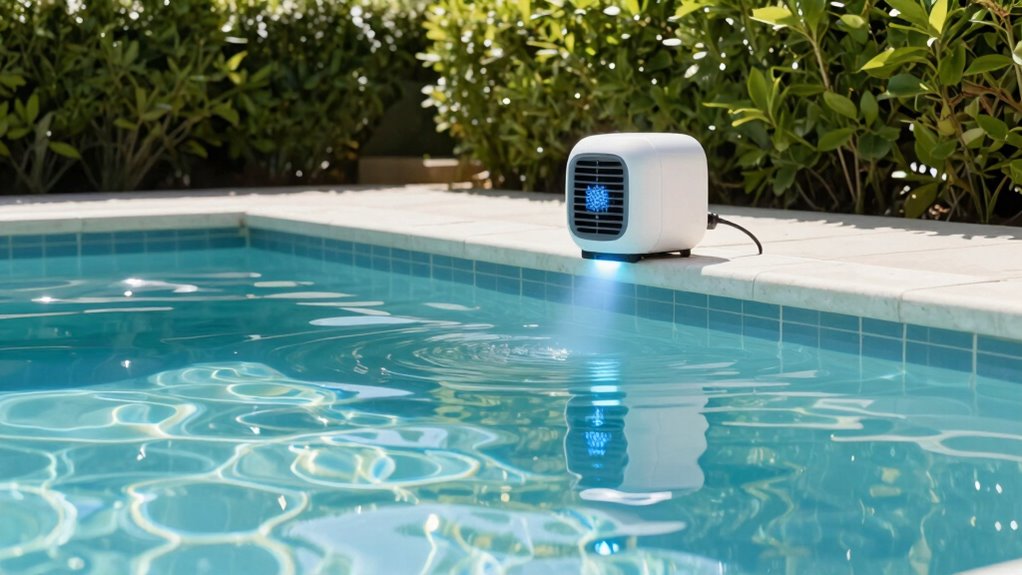
Deciding whether to install an ozone system depends on several key factors that can influence your pool’s maintenance and water quality. One major consideration is how the system will affect your pool’s aesthetics, as ozone helps reduce chemical odors and cloudy water, resulting in clearer, more inviting water. However, installation costs are an important factor; ozone systems can be more expensive upfront compared to traditional sanitizers. You should also evaluate your willingness to invest in long-term benefits like fewer chemical treatments and lower chlorine use. If you prioritize a pristine appearance and are prepared for the initial investment, an ozone system could be a worthwhile addition. Ultimately, weighing these factors will help you decide if ozone aligns with your pool maintenance goals and budget.
Frequently Asked Questions
How Does Ozone Affect Algae Growth in Pools?
Ozone helps control algae growth by destroying algae spores and organic matter that feed algae. It enhances algae control without relying solely on chemicals, so you can reduce chemical use in your pool. As a result, ozone minimizes the need for harsh algaecides and chemicals, creating a safer, healthier swimming environment. You’ll notice clearer water with less algae buildup, making maintenance easier and more eco-friendly.
What Maintenance Is Required for Ozone Systems?
They say “an ounce of prevention is worth a pound of cure,” and that’s true for ozone systems. You’ll need to regularly check the ozone installation for leaks, replace the UV bulbs annually, and clean the system components to guarantee peak performance. While system costs vary, proper maintenance keeps your ozone system running efficiently and extends its lifespan, saving you money in the long run. Regular upkeep is key to hassle-free pool enjoyment.
Can Ozone Eliminate All Pool Bacteria Completely?
Yes, ozone can eliminate nearly all pool bacteria, markedly enhancing pool sanitation. It acts quickly to break down contaminants, reducing your reliance on traditional chemicals. However, for complete safety, you should still use minimal amounts of chlorine or other sanitizers, especially for maintaining ongoing chemical reduction. Ozone’s powerful oxidation makes your pool safer and cleaner, but combining it with a small amount of chemicals ensures bacteria are fully controlled.
How Does Ozone Impact Pool Equipment Longevity?
Have you ever wondered how ozone can extend your pool equipment’s life? Well, it helps by reducing reliance on harsh chemicals, maintaining better pool chemical balance, and limiting corrosion. While ozone installation costs vary, the long-term savings are worth it. By minimizing chemical buildup and corrosion, ozone keeps your equipment running smoothly longer, so you enjoy clear water without frequent repairs. Isn’t preserving your pool’s lifespan worth considering?
Are There Any Health Risks With Long-Term Ozone Use?
Long-term ozone use is generally safe when properly maintained, but there are some health risks to contemplate. You might experience respiratory irritation if ozone levels are too high or if ventilation isn’t adequate. To ensure long-term safety, regularly monitor ozone levels and maintain proper system operation. When managed correctly, ozone offers a safe, effective way to keep your pool clean without posing significant health risks.
Conclusion
Now that you know how ozone can transform your pool, why settle for just basic sanitation? With its ability to improve water quality and reduce chemical use, ozone offers a smarter, safer choice for your family’s enjoyment. Isn’t it worth exploring how this powerful sanitizer can make your pool experience even better? Make an informed decision and enjoy crystal-clear, healthier water all season long. After all, isn’t a better pool experience what you truly deserve?