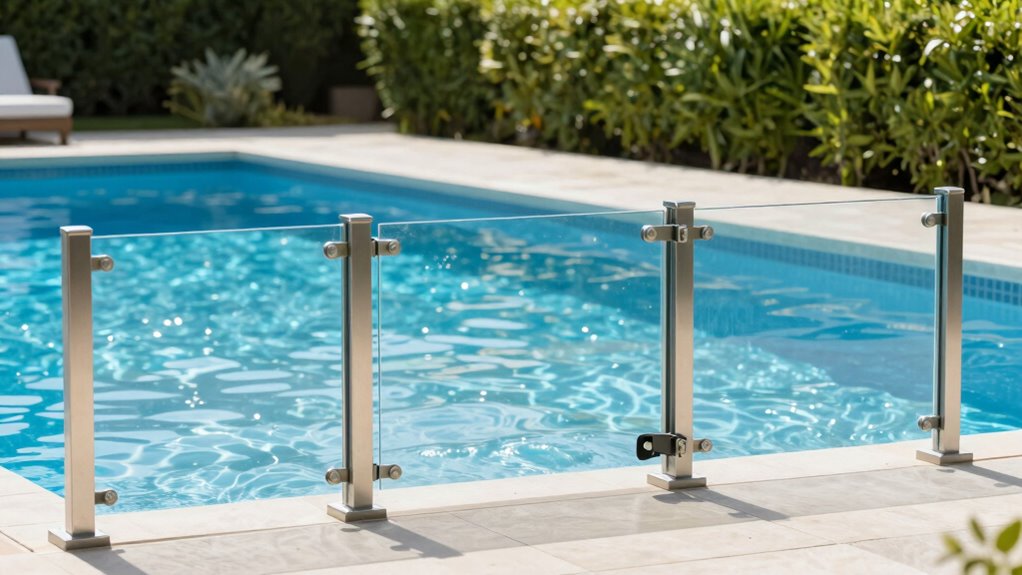

To keep your pool safe and compliant, verify your fence is at least 4 to 5 feet high, matching local requirements, and made of durable materials like metal, vinyl, or glass. Your gate should swing outward, have self-closing and self-latching mechanisms, with latches out of children’s reach. Avoid common mistakes like neglecting maintenance or landscaping hazards. Staying aligned with regulations prevents penalties. Want to make sure your fence meets all rules? Discover essential tips that help you stay compliant and safe.
Key Takeaways
- Fences must be at least 4 to 5 feet high, depending on local safety standards, to prevent climbing and unauthorized access.
- Gates should swing outward, be self-closing, self-latching, and have latches placed out of children’s reach.
- Regularly inspect and maintain fencing, gate hardware, and signage to ensure ongoing compliance and safety.
- Landscaping should be kept clear of climb hazards and visibility obstructions around the fence area.
- Verify local regulations for fence height, material durability, and gate security to avoid fines and legal issues.

Pool Fence DIY by Life Saver Self-Closing Gate Kit, Black (Pack of 1)
Easy-to-install, do-it-yourself gate kit for use with the Pool Fence DIY safety system; helps keep kids safe from…
As an affiliate, we earn on qualifying purchases.
As an affiliate, we earn on qualifying purchases.
What Are the Basic Height Requirements for Pool Fences?

To guarantee safety around pools, most regulations specify that fences must be a certain height to prevent children from climbing over. This is a vital part of pool safety, helping to reduce accidental drownings. Typically, pool fences should be at least 4 feet high, but some areas require even taller barriers. When choosing fence materials, durability and visibility matter. Common options include metal, vinyl, and wood, each offering different levels of strength and maintenance. Metal fences are sturdy and long-lasting, while vinyl fences provide a clean look with low upkeep. Wood fences can be attractive but may require more maintenance to stay safe and secure. Ensuring your fence meets height requirements is an essential first step in creating a safe pool environment. Additionally, understanding fence height regulations is crucial for compliance and safety, as local codes can vary significantly based on regional safety standards. Being aware of projected safety standards can help you select the best fencing option that aligns with local requirements. Recognizing the importance of European safety standards can further guide you in choosing compliant and effective fencing solutions. Moreover, consulting local building codes can help ensure your pool fencing adheres to all necessary legal requirements.
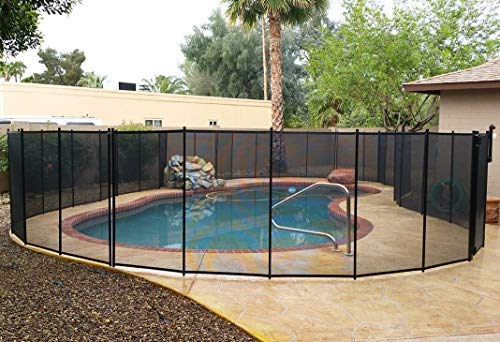
VINGLI Pool Fence 4Ft x 48FtSwimming Pool Fence in Ground Pool Safety Fencing, Black
Easy to Install. VINGLI fence section comes complete with hardware and clear instructions, the 5/8'' drill bit is…
As an affiliate, we earn on qualifying purchases.
As an affiliate, we earn on qualifying purchases.
How Tall Should My Pool Fence Be to Comply?

When aiming to meet safety regulations, you need to guarantee your pool fence is tall enough to prevent children from climbing over. Typically, the minimum height for pool fences is around 4 feet (1.2 meters), but check your local codes, as some areas require fences to be 5 feet tall for better pool security. The fence color can also influence visibility; opt for a color that’s easily seen to enhance safety and supervision. A well-chosen fence height discourages climbing and helps maintain compliance, reducing liability risks. Remember, a taller fence with a secure gate enhances overall pool security, making it harder for children or unauthorized persons to access the pool area. Staying within height regulations is a critical step in ensuring a safe, compliant pool environment. Understanding fence materials can also help you select a durable and safe option that meets the requirements. Additionally, considering fence maintenance ensures your barrier remains effective over time. Choosing the right fence installation techniques can further improve safety and durability.

Trident 10 Inch Tall Black Magnetic Pool Child Safety Gate Latch | Keyed Alike | TRIDENT-10-BK-KA
The most trusted pool safety gate latch | Gate gap: 3/8 inch to 1-1/2 inch | Meets pool…
As an affiliate, we earn on qualifying purchases.
As an affiliate, we earn on qualifying purchases.
How Do I Design a Safe and Compliant Pool Gate?

A well-designed pool gate plays a pivotal role in maintaining safety and ensuring compliance. To achieve this, focus on secure latching mechanisms and proper placement. Your gate should swing outward, away from the pool area, and be self-closing with an automatic latch at the top. Use durable fencing materials like aluminum, vinyl, or treated wood that resist tampering and weather. Consider the following features:
| Feature | Why It Matters |
|---|---|
| Self-closing latch | Prevents accidental gate opening |
| Height of gate | Matches fencing height for safety |
| Smooth edges | Reduces injury risk |
| Key lock or latch | Adds extra security |
Designing a compliant pool gate enhances pool safety and keeps your family protected. Additionally, understanding wave and wind impacts can help ensure your fencing remains secure under various weather conditions.

JIAHOO Post Mount Gate Latch for Wooden Fence – Heavy Duty Self Locking Gate Latch Hardware for Pool/Garden Gate Safety Latch, Automatic Fingertip Release Latches for Vinyl/Wood Fence, Black Finish
【Self-latching Design】Self-latching fingertip release Latch, Automatically locking,Conveniently Using,for inward and outward swinging gates and doors.
As an affiliate, we earn on qualifying purchases.
As an affiliate, we earn on qualifying purchases.
What Are Common Mistakes Homeowners Make With Pool Fencing?

Many homeowners overlook critical details when installing pool fencing, which can compromise safety and lead to violations of local regulations. Common mistakes include neglecting landscaping mistakes that create climb hazards or obstruct visibility, undermining fence effectiveness. Additionally, poor fence maintenance, such as ignoring rust, loose panels, or broken latches, weakens the barrier over time. Some homeowners also forget to check gate self-closing and latching mechanisms, risking accidental openings. Failing to keep the area around the fence clear or allowing plants to grow too close can provide footholds for children. Landscaping practices that incorporate native plants can help minimize climbability and maintain safety. Proper fence installation and adherence to safety standards are crucial for preventing accidents. Regularly inspecting your fence components ensures early detection of potential issues before they compromise safety. Implementing safety standards based on reliable guidelines can further enhance the security of your pool area. Moreover, paying attention to local regulations ensures your pool fencing remains compliant with current laws and standards.
Which Materials Are Allowed for Pool Fences?

Choosing the right materials for your pool fence is essential to guarantee safety, durability, and compliance with local regulations. Material options vary widely, including wood, metal, vinyl, and glass, each with its advantages and limitations. Most regulations prefer fences made from materials that are sturdy and resistant to weather, ensuring fencing durability over time. Metal fences, such as aluminum or steel, are popular for their strength and longevity. Vinyl fences offer low maintenance and a clean appearance, while glass fences provide unobstructed views and a modern look. When selecting materials, check your local codes, as some areas restrict certain options or require specific features for safety. Proper material selection is crucial for creating a compliant and long-lasting pool enclosure. Additionally, understanding backup power options can be beneficial in case of outages, ensuring safety equipment remains operational. Being aware of regulatory requirements helps prevent costly violations and ensures your pool fence meets all safety standards.
How Close Can Fences Be to the Pool Area?

To guarantee safety and comply with local regulations, fences must be installed at specific distances from the pool area. This ensures safety barriers effectively prevent accidental access by children or pets. Typically, fencing materials should be sturdy and durable, like metal, vinyl, or treated wood, to withstand weather and tampering. The code usually requires a minimum setback—often at least 2 feet—from the pool edge to the fence, but this varies by jurisdiction. Avoid placing fences directly against the pool to reduce risk and allow for proper maintenance. Always check your local regulations because some areas may demand larger clearances or specific fencing materials. Proper spacing not only enhances safety but also ensures your pool area remains compliant with safety standards. Additionally, understanding deep-sky imaging principles can inspire you to create a safe and attractive pool environment that blends with your landscape design.
What Are the Rules for Fence Gates and Access Points?

Fence gates and access points must be designed and installed to guarantee they are secure and easily controllable. Ensuring proper access point security prevents unauthorized entry and keeps children safe. Gate latch requirements are vital; they should be self-closing, self-latching, and positioned out of a child’s reach. Many codes specify that latches must be a certain height above the ground and must be operable from both sides for easy access in emergencies. The gate should swing inward only, to avoid accidental openings. Regularly check that hinges and latches work smoothly and remain secure. Proper compliance with these standards helps reduce liability and ensures your pool area remains safe and compliant with local regulations. Studies show that homes with proper security measures are more likely to prevent unauthorized access, enhancing overall safety. Additionally, staying informed about local fencing regulations can help you avoid common code traps and ensure your fencing setup meets all safety requirements. Incorporating regular maintenance checks can further ensure continued safety and compliance over time. Being aware of fence gate safety standards can help you implement best practices and avoid costly violations.
How Can I Verify If My Existing Pool Fence Meets Local Codes?

Since local codes can vary, the best way to verify if your existing pool fence meets requirements is to review your property’s current fencing against the specific regulations in your area. Start by checking the height and gate security, ensuring they align with local standards. Next, examine the fencing materials to confirm they are durable and safe, preventing easy climbing or tampering. Finally, consider how the fence impacts ongoing pool maintenance—are there gaps or features that hinder regular upkeep? To be thorough, consult your local building authority or code enforcement office, and look for any recent updates to regulations. Reviewing pool safety standards can provide additional guidance to ensure your fencing complies. Taking these steps helps ensure your pool fencing is compliant, keeping your pool safe and avoiding potential fines.
What Penalties Might I Face for Non-Compliance?

Are you aware of the potential consequences if your pool fence doesn’t meet local safety standards? Non-compliance can lead to hefty fines, legal action, and increased liability insurance premiums. Authorities may require you to replace or upgrade your fence, which can be costly and disruptive. Additionally, failure to meet safety signage requirements or height regulations could result in warnings or penalties. If an accident occurs due to an inadequate fence, you could be held liable, impacting your personal finances and insurance coverage. Ensuring your fence complies with all regulations helps you avoid these penalties and protects your family. Staying compliant not only keeps you legal but also reduces the risk of costly lawsuits and insurance issues, keeping your pool area safe and secure.
How Can I Prepare for My Pool Fence Inspection?

Preparing for your pool fence inspection starts with understanding what inspectors will look for and guaranteeing your fence meets all safety requirements. First, check that your fence height and gate latching mechanisms comply with local codes. Next, ensure your landscaping aesthetics don’t obstruct the fence or create climb hazards. Also, make sure pool safety signage is visible and properly installed. To prepare, consider these key steps:
- Trim or adjust landscaping around the fence to maintain clear boundaries
- Verify that all safety signage is legible and correctly positioned
- Conduct a visual inspection to confirm gate latches and fence height meet standards
Frequently Asked Questions
Are There Specific Color Restrictions for Pool Fencing?
You don’t usually have to worry about strict color restrictions for pool fencing, but it’s best to verify local regulations. When choosing your fencing, consider the pool color and fencing aesthetics to ensure they complement each other. Neutral colors like white, beige, or black are common because they blend well with most environments. Picking a color that matches or enhances your pool area can improve the overall look and feel of your backyard.
Can I Install a Temporary Pool Fence During Construction?
Think of temporary fencing as a safety net during construction, catching potential accidents before they happen. You can install a temporary pool fence during construction, but you must follow construction regulations. Make certain it’s secure, meets height and gate requirements, and is removed promptly once your pool is ready. Staying compliant with these rules keeps everyone safe and prevents costly fines, making your project smoother and stress-free.
Do Swing or Sliding Gates Have Different Compliance Rules?
Swing and sliding gates do have different compliance rules. Swing gates must open outward and be self-closing, ensuring they can’t be pushed open easily. Sliding gates typically require secure locks and smooth operation to prevent children from gaining access. You should check local regulations for specific requirements, but generally, swing gates prioritize outward opening and self-closing mechanisms, while sliding gates focus on secure locking systems to meet safety standards.
Are There Special Requirements for Fencing Around Above-Ground Pools?
Did you know over 50% of pool drownings occur in residential settings? For above-ground pools, safety barriers are essential. You need a compliant fence at least 4 feet high, with a lockable gate to prevent accidental access. Special requirements include ensuring there are no gaps or footholds that kids can use to climb over. These measures protect your loved ones and keep your above-ground pool legally safe.
How Often Should Pool Fences Be Inspected for Safety Compliance?
You should inspect your pool fence regularly, ideally every three to six months, to guarantee its durability and safety compliance. Frequent inspections help catch issues like loose hardware, rust, or damage early, preventing accidents. By maintaining a consistent inspection schedule, you keep your fence secure, and comply with safety standards, reducing the risk of accidents. Stay proactive and check your pool fence often to keep your pool area safe for everyone.
Conclusion
Ensuring your pool fence meets all regulations keeps your loved ones safe and avoids costly fines. For example, imagine installing a gate that’s easy for kids to open—risking accidental entry. By following height requirements, choosing proper materials, and securing access points, you create a safer environment. Regularly check your fence’s compliance and prepare for inspections. Staying informed and proactive helps you enjoy your pool responsibly, knowing you’ve minimized safety hazards for everyone.