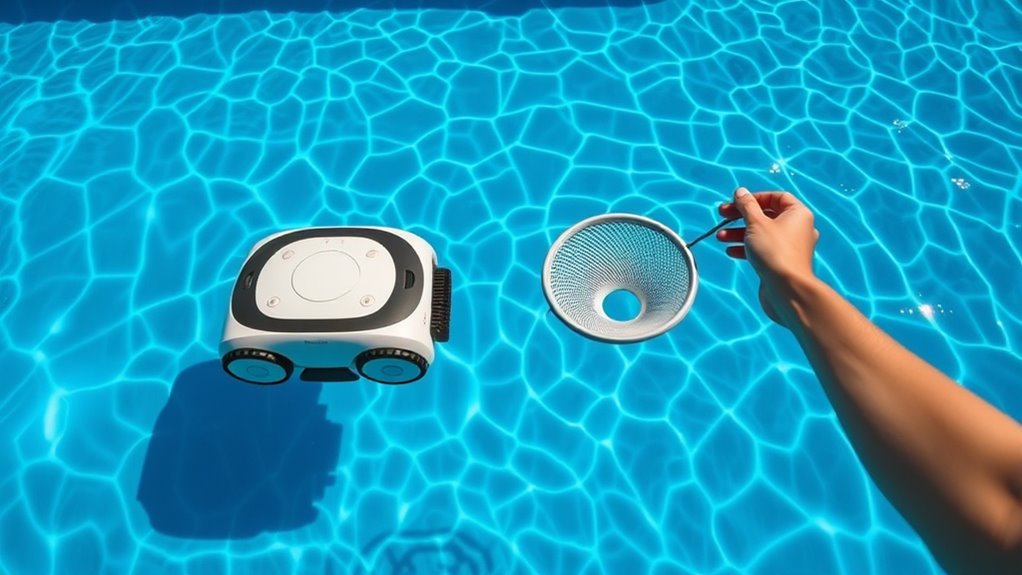

Robotic pool cleaners are a smart choice if you want to save time, effort, and money. They use minimal energy, operate automatically, and require little maintenance, making them more cost-effective over the long run compared to manual cleaning. While manual methods might suit occasional needs or smaller pools, robots excel in convenience and consistency. To discover whether switching is worth it for your pool, explore how these devices compare to manual cleaning benefits.
Key Takeaways
- Robotic cleaners are more energy-efficient and cost-effective over time compared to manual cleaning.
- They require less maintenance and reduce ongoing expenses with self-cleaning features.
- Automated operation saves significant time and physical effort, ideal for busy schedules.
- Manual cleaning offers upfront cost savings but demands more labor and time long-term.
- Overall, robotic cleaners provide consistent, thorough cleaning, making them worth the investment for convenience.
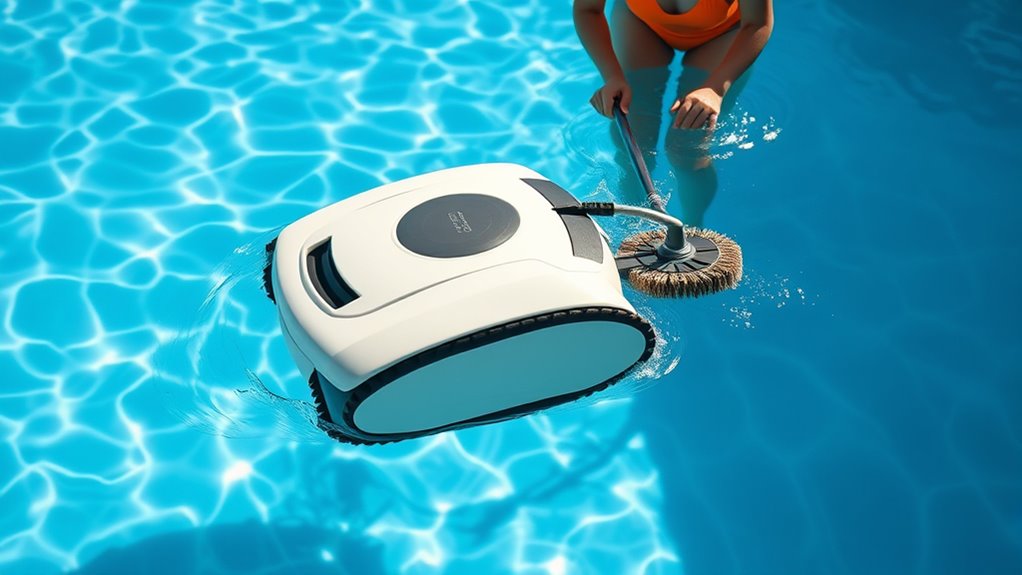
When it comes to maintaining a clean pool, choosing between robotic pool cleaners and manual cleaning methods can considerably impact your time and effort. If you’re contemplating a robotic cleaner, one major advantage is its energy efficiency. These devices are designed to operate with minimal power consumption, often using less energy than traditional pool vacuums or manual scrubbing. Over time, this savings on electricity can be significant, especially if you run your cleaner regularly. Additionally, robotic cleaners tend to have lower maintenance costs. They are built with durable parts that require little upkeep, and many models come with self-cleaning filters, reducing the need for frequent filter replacements or manual cleaning. This means you spend less money and effort on upkeep, making them a cost-effective option in the long run. Moreover, robotic pool cleaners often feature automatic operation, which allows you to set cleaning schedules and forget about manual intervention altogether.
On the other hand, manual cleaning methods—like skimming, brushing, and vacuuming—give you direct control over your pool’s cleanliness. While manual work can be more time-consuming and physically demanding, it doesn’t require an upfront investment in a robotic device. You don’t need to worry about energy costs since manual cleaning relies solely on your effort. However, the ongoing labor can add up, especially if your pool is large or becomes dirty often. You might find yourself spending more time and effort than you’d like, and over years, the cumulative costs of manual tools, replacement parts, and cleaning supplies can add up. Plus, manual cleaning doesn’t match the energy efficiency of robots, which are designed to optimize cleaning while consuming minimal power.
Another factor to consider is how often you need to clean your pool. If you’re diligent and can dedicate time regularly to manual maintenance, you might not see as much benefit from a robotic cleaner. But if you’re busy or want a more automated approach, investing in a robotic cleaner could save you hours each week. It handles routine cleaning without your supervision, freeing you to focus on other things. Over time, the reduced energy use and lower maintenance costs make robotic cleaners an attractive option for many pool owners. They’re especially beneficial if you want consistent, thorough cleaning without the hassle of manual labor.
In the end, weighing the energy efficiency and maintenance costs of robotic pool cleaners against manual methods can help determine what’s best for your lifestyle and budget. If you value convenience, long-term savings, and energy efficiency, robots are definitely worth considering.
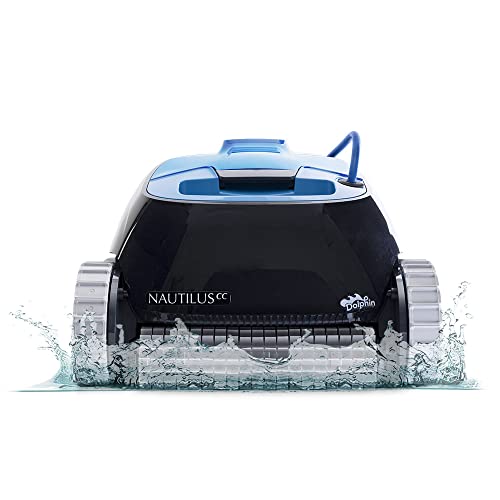
Dolphin Nautilus CC Automatic Robotic Pool Vacuum Cleaner, Wall Climbing Scrubber Brush, Top Load Filter Access, Ideal for Above/In-Ground Pools up to 33 FT in Length
WALL-SCRUBBING POWER: Dolphin Nautilus CC climbs walls efficiently, ensuring thorough cleaning on any pool surface, no matter the…
As an affiliate, we earn on qualifying purchases.
As an affiliate, we earn on qualifying purchases.
Frequently Asked Questions
How Long Do Robotic Pool Cleaners Typically Last?
Robotic pool cleaners usually last between 3 to 8 years, depending on usage and maintenance. Their battery life impacts lifespan, so regular charging is essential. You might need replacement parts like brushes or filters over time to keep it running smoothly. Proper care can extend its longevity, making these devices a worthwhile investment if you want hassle-free cleaning without constantly replacing the robot.
Are Robotic Cleaners Suitable for All Pool Types?
Imagine your pool as a royal throne—glittering, pristine, and demanding. Robotic cleaners suit most pool surfaces, from tiles to vinyl, effortlessly sweeping away debris. They excel with ample filter capacity, handling dirt without clogging. But if your pool’s surface is delicate or oddly shaped, you might find these robots less regal and more rebellious, requiring manual care. Still, for standard pools, they’re a royal promise of cleanliness.
What Maintenance Do Robotic Pool Cleaners Require?
You’ll need to perform regular maintenance on your robotic pool cleaner to keep it running smoothly. This includes cleaning or replacing the filter to guarantee ideal suction and filtration. Also, keep an eye on the battery life, as it can diminish over time, affecting cleaning efficiency. Occasionally, check the brushes and wheels for debris or wear, and follow the manufacturer’s guidelines for any additional maintenance to extend your robot’s lifespan.
Can Robotic Pool Cleaners Handle Algae or Heavy Debris?
Robotic pool cleaners can handle algae removal and heavy debris handling, but their effectiveness depends on the model. Some advanced robots are equipped with specialized brushes and filters to tackle algae buildup and large debris effectively. However, for stubborn algae or very heavy debris, you might need to supplement with manual cleaning or chemical treatments. Overall, many robotic cleaners offer good performance, making pool maintenance easier and more efficient.
What Is the Average Cost Difference Between Robots and Manual Cleaning?
When considering the cost comparison between robotic pool cleaners and manual cleaning, you’ll find that robotic options tend to have a higher upfront price, typically ranging from $300 to $1,200. Manual cleaning costs less initially but adds up over time due to labor and supplies. If you’re on a budget, weigh the long-term convenience of robots against the lower initial investment of manual cleaning.

Poolvio Swimming Pool Cleaning Kit, 14'' Brush Head & 50'' Telescopic Aluminum Pole with Fine Mesh Skimmer Net – Perfect for Above Ground Pools, Spas, Hot Tub Fountains Blue (PK0140)
PRO SPA MAINTENANCE SET- Pool maintenance kits includes one 10” vinyl liner pool brush, one ultra-fine mesh pool…
As an affiliate, we earn on qualifying purchases.
As an affiliate, we earn on qualifying purchases.
Conclusion
Ultimately, robotic pool cleaners save you time, save you effort, and save you hassle. They handle dirt, debris, and hard-to-reach corners with ease, giving you more moments to enjoy your pool rather than clean it. While manual cleaning offers control, robots offer consistency and convenience. So, whether you prioritize efficiency, convenience, or thoroughness, weighing these factors helps you decide if investing in a robotic cleaner is worth it for your pool’s needs.

Pondee X1 Robotic Pool Vacuum, Cordless Pool Cleaner with 120-Min Runtime, Auto-Parking, 2.5h Fast Charging, for Above-Ground & Flat-Bottom Inground Pools up to 850 sq.ft
Effortless Dual-Motor Cleaning for Everyday Care: Driven by precision-engineered dual brushless motors and dual suction ports, the Pondee…
As an affiliate, we earn on qualifying purchases.
As an affiliate, we earn on qualifying purchases.

TidyMister 3PCS Cleaning Kit – 12.5'' Brush With Round End & 11'' Skimmer Net Fine Mesh & 5.7 Feet Thick Aluminum Pole 5-Segment, for Above Ground & Inground Pools Ponds
[Rounded Edge Pool Brush]: The round edge shape of the brush is important for easily cleaning narrow corners…
As an affiliate, we earn on qualifying purchases.
As an affiliate, we earn on qualifying purchases.